Back to Blog 
 Sam Alves
AuditWeb3 SecuritySolidityAI Audits
Solidity Smart Contract Audit 2026: Pricing, AI & Readiness Manifesto
8 min
By 2026, the era of treating a Solidity Smart Contract Audit as a "marketing checkbox" is over. Following the $3.1B in losses recorded in 2025, the industry has professionalized by force. If you are a Senior Engineer or CTO preparing for a launch, you are no longer just buying a PDF report; you are managing an existential risk.
This guide outlines the shift in smart contract audit pricing models 2026 from simplistic pricing to logic-density valuation, the integration of agentic AI in the audit workflow, and the technical prerequisites now required to even secure a slot with a top-tier firm. It is critical to understand smart contract security dynamics to survive.
1. The Death of the "Price per Line" Model
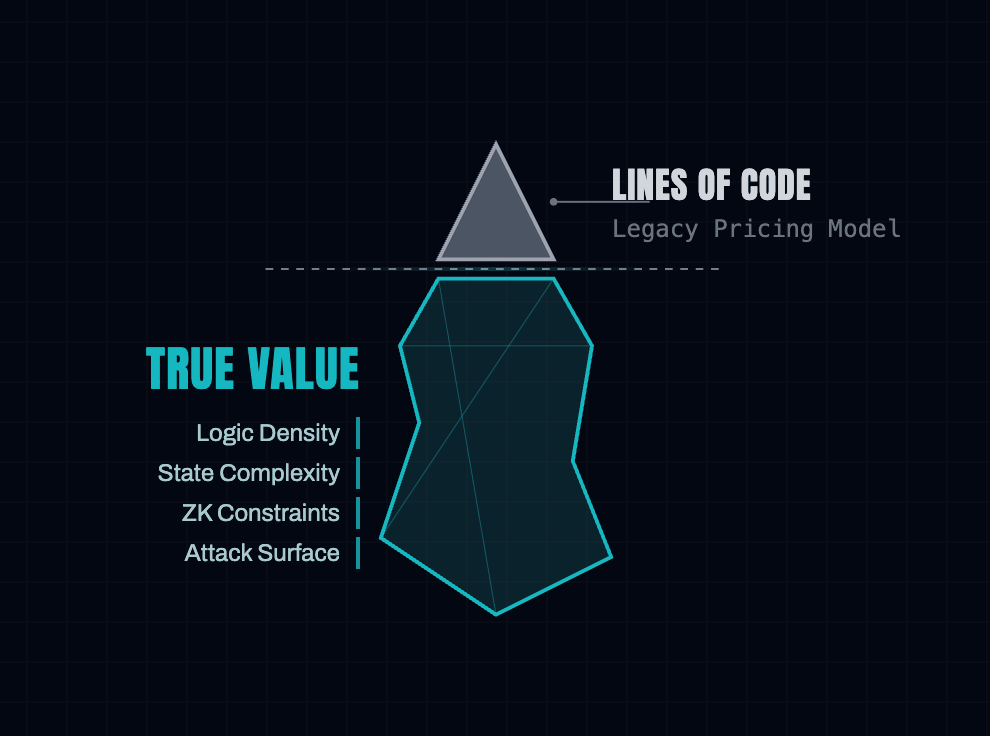
The most significant shift affecting Smart Contract Audit Cost in 2026 is the abandonment of "Lines of Code" (LoC) as a pricing metric. Top-tier firms now use Logic Density Valuation.
A 500-line Zero-Knowledge (ZK) verifier or a cross-chain bridge carries exponentially more state-transition risk than a 5,000-line standardized ERC-20 implementation. Auditors now price based on cognitive load and "Economic Attack Surface."
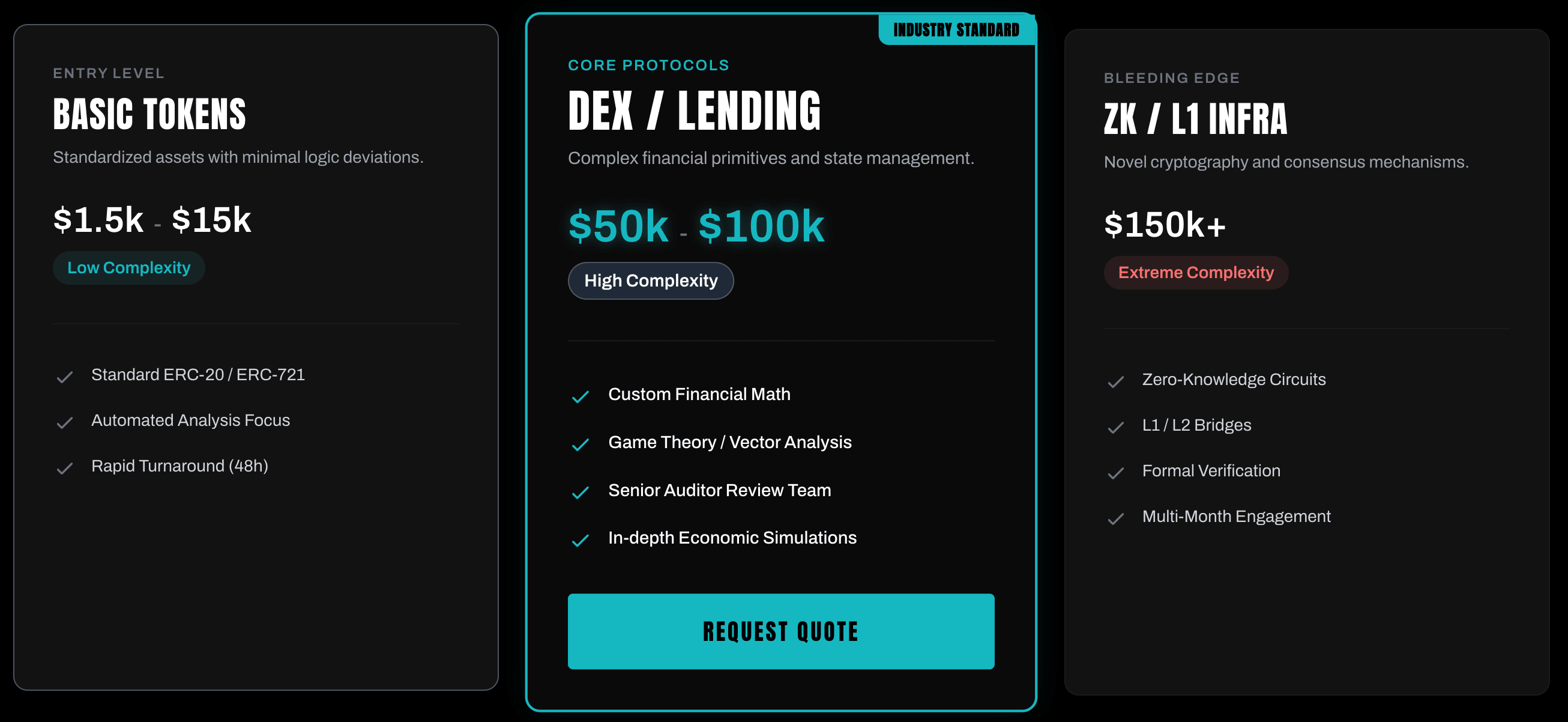
2026 Market Pricing Tiers
| Protocol Complexity | Asset Type / Use Case | Est. Cost (USD) | Typical Duration |
|---|---|---|---|
| Commoditized Logic | Standard Tokens, Basic NFTs | 15k | 2 – 5 Days |
| Standard DeFi | DEXs, Lending, Staking | 100k | 3 – 6 Weeks |
| Infrastructure | L1s, ZK-Rollups, Bridges | 500k+ | 2 – 6 Months |
Note on the "Urgency Tax": Requesting a two-week turnaround for a six-week project is no longer an "expedited fee." It is a 30–50% tax on poor project management. In 2026, firms prioritize their internal researcher fatigue over your "marketing-driven" launch date.
2. The Hybrid Workflow: Human Expertise + Agentic AI
By 2026, AI in Smart Contract Auditing is no longer a tool for writing boilerplate; it is essential security infrastructure. However, the threat landscape has evolved into an arms race.
Agentic Exploit Generation
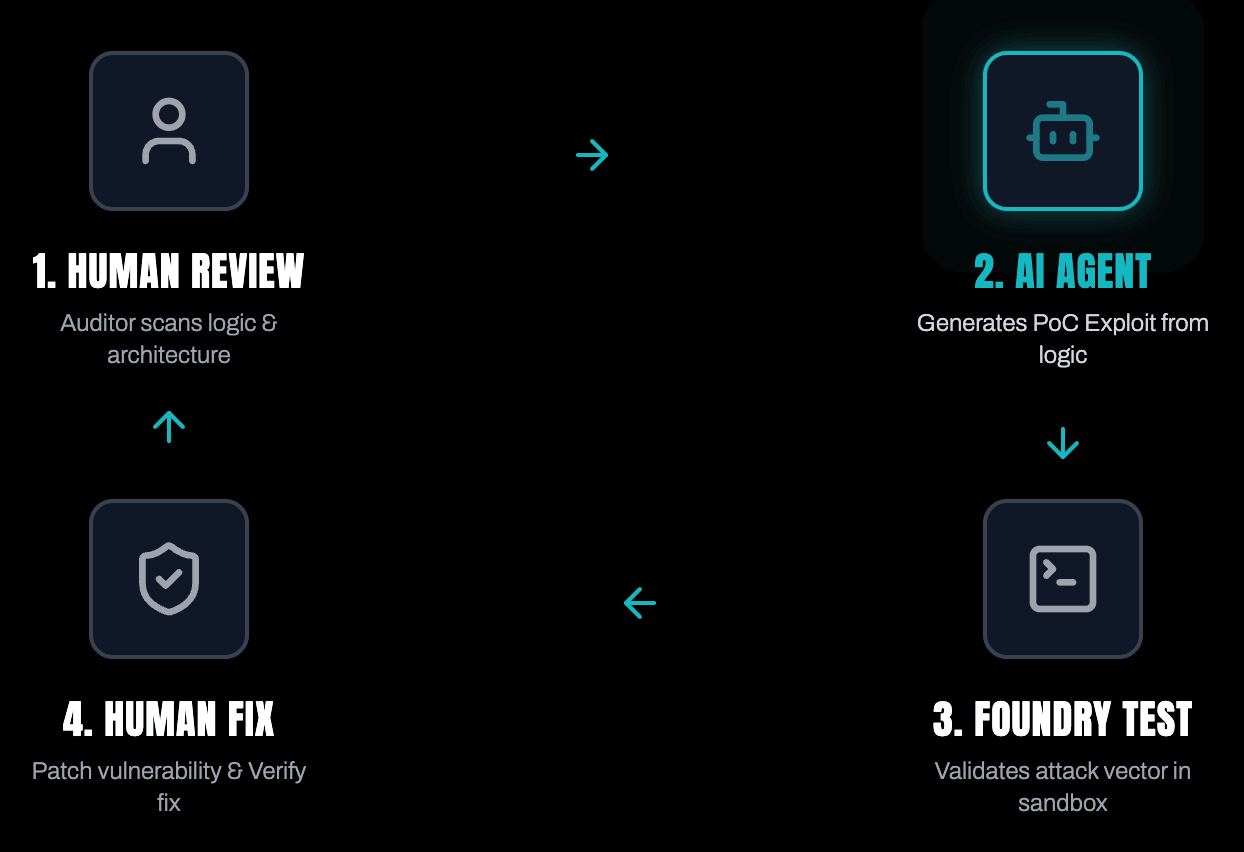
Auditors now utilize agentic frameworks (like POCO) that autonomously generate executable Proof-of-Concept (PoC) exploits.
- The Workflow: An auditor identifies a potential reentrancy vector and describes it in natural language to an AI agent.
- The Output: The agent constructs a Foundry test case that successfully drains the contract. If it doesn't execute, the finding is deprioritized.
AI-Guided Fuzzing
Traditional random fuzzing is too slow for 2026's complex state machines. Tools like Medusa and Echidna are now augmented with AI heuristics that analyze the Control Flow Graph (CFG) to generate inputs specifically designed to traverse deep execution paths.
The Adversarial Reality: Attackers use the same AI agents to scan thousands of contracts in parallel. This has reduced the "response window" for a discovered zero-day from days to minutes. If your auditor isn't using AI to find bugs, the hackers certainly are.
3. Technical Prerequisites: The "Audit Ready" Standard
Submitting a codebase that doesn't follow a strict Audit Readiness Checklist is the fastest way to burn your budget. Reputable firms will now reject or delay engagements that do not meet these three benchmarks. Knowing how to prepare for a smart contract audit is now a prerequisite.
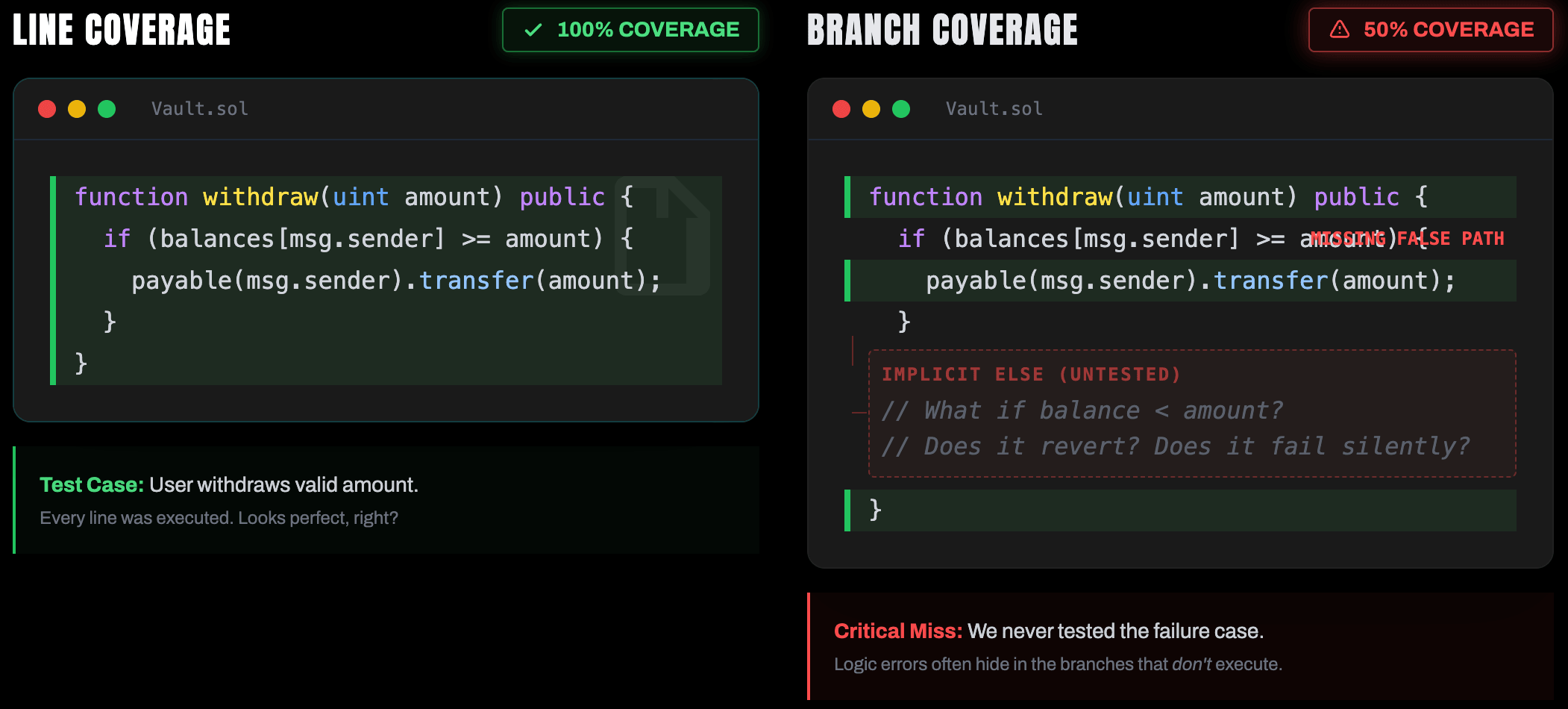
100% Branch Coverage
Line coverage is a vanity metric. In 2026, 100% Branch Coverage is the baseline. You must prove that every possible decision path, the
true and false of every if statement, has been executed in your test suite.Documentation of Invariants
Auditors no longer guess your intent. You must provide a formal Invariants List: a set of mathematical truths that must never be violated.
- Example: "The sum of all user balances must always be less than or equal to
totalAssets." - These invariants are used to configure Formal Verification (FV) tools like Halmos or Certora.
The Code Freeze
The audit is performed on a specific commit hash. Any modification during the audit, no matter how small, invalidates the preliminary findings.
4. The 2026 Modern Toolchain
If your local environment doesn't mirror the auditor’s stack, you will find bugs they have already "solved."
| Category | Tool Standard | Use Case |
|---|---|---|
| Development | Foundry | The industry standard. Hardhat is now primarily used for legacy maintenance. |
| Static Analysis | Aderyn | Rust-based AST traversal. Fast, low false-positive rate. |
| Formal Verification | Halmos | Symbolic execution that leverages your existing Foundry tests. |
| Security LLMs | Sherlock AI V2 | Pattern matching for context-dependent logic errors. |
5. Legal and Liability: The "No-AI Training" Clause
As a CTO, your IP is your most valuable asset. In 2026, standard Smart Contract NDAs must include a "No-AI Training" Clause. This forbids the audit firm from using your proprietary codebase to train their internal LLMs or AI agents. Without this, your unique logic could leak into the weights of a model used by a future competitor.
Furthermore, Auditor Liability Standards are shifting from Recklessness to Negligence. This means auditors are increasingly liable if they miss a bug that a "reasonably competent" auditor should have caught. Expect more rigorous engagement letters and higher "Brand Taxes" from firms that carry the necessary insurance to back their findings.
Are you audit-ready?
Download the free Pre-Audit Readiness Checklist used by 30+ protocols preparing for their first audit.
No spam. Unsubscribe anytime.
6. Strategic Checklist for Protocol Leaders
Phase 1: Preparation (1 Month Pre-Audit)
- Define Invariants: Write down the 10 most critical rules your protocol must never break.
- Branch Coverage: Ensure
forge coveragereturns 100% on all core logic. - Negative Testing: Write tests specifically designed to fail (e.g., verifying a non-owner cannot call
renounceOwnership).
Phase 2: Execution
- Commit Hash Lock: Tag your "Audit Release" and stop all development.
- Communication: Establish a dedicated channel for real-time logic clarification.
- PoC Requirement: Demand that all High/Critical findings include an executable Foundry PoC.
Phase 3: Post-Audit
- Fix Verification: Never assume a fix is correct. Always engage the auditor for a "post-fix" review.
- Monitoring: Deploy real-time threat detection (e.g., Forta) to monitor for the invariants you defined in Phase 1.
Get in Touch
Ready to ship securely? Don't let your protocol be the next statistic.
Get a Quote or Contact Us to discuss your security, compliance, and audit readiness needs today.
FAQ: Solidity Smart Contract Audit 2026
1. How much does a Solidity smart contract audit cost in 2026?
The cost varies significantly based on logic density rather than just lines of code. For Commoditized Logic (standard tokens), expect 15k. Standard DeFi protocols typically range from 100k, while complex Infrastructure projects (L1s, ZK-Rollups) can cost 500k+.
2. Why is 'Lines of Code' (LoC) pricing considered dead?
LoC ignores complexity. A 500-line ZK verifier has exponentially more risk and cognitive load than a 5,000-line ERC-20 token. Modern pricing models use Logic Density Valuation to accurately reflect the "Economic Attack Surface" and the expertise required to audit it.
3. What is Agentic AI in smart contract auditing?
Agentic AI refers to autonomous AI agents that can not only identify potential vulnerabilities but also construct executable Proof-of-Concept (PoC) exploits. Auditors use these to simulate real-world attacks and validate findings with concrete evidence.
4. How can I reduce my smart contract audit cost?
You can lower costs by reaching the "Audit Ready" Standard: achieve 100% Branch Coverage in your tests, document a formal Invariants List, and ensure your code is frozen before engagement. High-quality documentation and pre-audit preparation reduce the auditor's workload and the "Urgency Tax".
5. What is the difference between line coverage and branch coverage?
Line coverage only measures if a line of code was executed. Branch Coverage ensures that every possible branch of control flow (e.g., both the
true and false paths of an if statement) has been tested. In 2026, 100% Branch Coverage is the required baseline for top-tier audits.6. Do I really need a 'No-AI Training' clause in my NDA?
Yes. This clause prevents audit firms (and their AI tools) from using your proprietary code to train their models. Without it, your unique intellectual property and logic could potentially leak into future AI models used by competitors.
Glossary
| Term | Definition |
|---|---|
| LOC Pricing | Audit pricing methodology based on lines of code, typically ranging from $20-50 per line of logic. |
| Agentic AI | AI systems that autonomously take actions in the real world, including executing commands, managing files, and interacting with external services. |
Are you audit-ready?
Download the free Pre-Audit Readiness Checklist used by 30+ protocols preparing for their first audit.
No spam. Unsubscribe anytime.