Vote-Escrowed Token
Governance token locked for extended periods to gain voting power and rewards, pioneered by Curve's veCRV.
Vote-Escrowed Tokens (ve-tokens) are a governance mechanism pioneered by Curve Finance where users lock their governance tokens for extended periods (up to 4 years) to receive voting power and enhanced rewards. The longer the lock period, the more vote-escrowed tokens received. This model aligns long-term stakeholder incentives with protocol governance by giving the most influence to those willing to commit capital for extended durations, while filtering out short-term speculators and mercenary governance participants.
The innovation emerged from recognizing failures in traditional one-token-one-vote governance. Short-term holders could borrow governance tokens via flash loans, vote to manipulate protocol parameters for profit, then return the tokens—all within a single transaction. By requiring time-locked commitments, ve-tokens make such attacks economically infeasible. The locked capital requirement also creates skin-in-the-game, ensuring voters bear consequences of their governance decisions.
Curve's veCRV Mechanics
veCRV (vote-escrowed CRV) is obtained by locking CRV tokens for periods between 1 week and 4 years. The conversion rate follows a linear function: locking 100 CRV for 4 years yields 100 veCRV, while locking for 2 years yields 50 veCRV, and 1 year yields 25 veCRV. This linear time-weighting creates strong incentives for maximum lock periods—users willing to commit for 4 years gain 4x the voting power of those committing for 1 year with the same CRV amount.
The veCRV balance decays linearly over time toward zero. Someone who locked 100 CRV for 4 years initially holds 100 veCRV, but one year later holds 75 veCRV, then 50 veCRV after two years, approaching 0 as the lock expiration nears. This decay ensures voting power correlates with remaining commitment duration—users whose locks are nearly expired have minimal influence, while those with years remaining maintain strong voting power.
Lock extensions allow users to increase their veCRV balance without adding more CRV. Extending a lock from 2 years remaining to 4 years remaining instantly increases veCRV proportionally. This flexibility enables users to maintain maximum voting power by periodically extending locks rather than waiting for expiration and re-locking, which would temporarily reduce their influence during the unlock/re-lock period.
Upon lock expiration, users can withdraw their originally locked CRV. The CRV tokens themselves are never destroyed or burned—they're merely time-locked in the contract. This non-dilutive aspect distinguishes ve-tokens from staking mechanisms that might burn tokens or distribute them as rewards, making veCRV a pure governance instrument rather than a yield-bearing asset.
Governance Power and Gauge Weights
veCRV holders control gauge weights, which determine how CRV emissions (inflation rewards) distribute across different Curve liquidity pools. Each two-week epoch, veCRV holders vote to direct emissions toward pools. A pool receiving 10% of votes gets 10% of that epoch's CRV emissions, which are distributed to that pool's liquidity providers. This mechanism allows decentralized control over protocol incentives without centralized decision-making.
The gauge weight voting power creates the phenomenon described in the article as the "Curve Wars." Protocols building on or integrating with Curve (Convex Finance, Yearn, Frax, etc.) accumulate large veCRV positions to direct emissions toward their own pools. A stablecoin project controlling 20% of gauge weight votes can ensure their stablecoin's Curve pool receives substantial CRV emissions, attracting deep liquidity that enables low-slippage trading and wider DeFi integration.
Vote incentivization or "bribing" emerged as protocols realized they could pay veCRV holders to vote for specific gauges. Platforms like Votium and Hiddenhand facilitate this by allowing anyone to offer rewards to veCRV holders who vote for particular pools. This creates a market for governance influence where protocols compete to attract votes, with veCRV holders capturing value from multiple sources: CRV emissions boost from holding veCRV, trading fees from their liquidity positions, and bribes for their votes.
Economic Security and Governance Risks
Governance capture represents the primary security concern for ve-token systems. If a single entity accumulates majority veCRV (>50%), they control emissions completely. They could direct all rewards to pools they control or manipulate, extract maximum value, then exit, leaving other participants with worthless pool positions. The 4-year lock requirement provides some protection—accumulating majority control takes time and capital—but well-funded attackers could gradually build positions.
The Curve Wars themselves represent a form of governance centralization, though not necessarily malicious. A few large protocols (Convex, Frax, Yearn) control significant veCRV percentages. While their interests generally align with Curve's health, coordinated action among these major players could override smaller stakeholders' interests. This concentration emerged organically through competition but creates systemic risk if major stakeholders' incentives ever misalign with protocol health.
Vote buying markets introduce economic security considerations distinct from traditional exploits. By paying for votes, protocols can manipulate emissions without directly controlling veCRV. This isn't inherently malicious—it's a designed feature—but enables scenarios where short-term profit extraction becomes viable. A protocol could bribe heavily for one epoch, inflate their pool's APY, attract mercenary liquidity, then exploit that liquidity through other means before emissions redirect elsewhere.
Time lock arbitrage creates interesting attack vectors. An adversary could accumulate CRV, wait for a governance proposal critical to protocol security or economics, lock their CRV for 1 week (minimum duration), gain immediate voting power (albeit small), vote maliciously, then unlock after the proposal passes. While the short lock provides minimal voting power, coordination among many such participants could influence close votes. The linear time-weighting reduces this attack's effectiveness but doesn't eliminate it entirely.
ve-Token Adoption Beyond Curve
The ve-token model's success with Curve governance led to widespread adoption across DeFi. Yearn Finance implemented veYFI with similar mechanics. Balancer uses veBAL for gauge weight voting controlling BAL emissions. Numerous smaller protocols adopted ve-tokenomics, recognizing that aligning long-term holder incentives through time-locks provides better governance outcomes than simple token voting.
However, ve-token liquidity problems emerged as a major limitation. Locked tokens cannot be sold, limiting participants' ability to exit positions if circumstances change or better opportunities arise. This illiquidity deterred many participants from locking, as the 4-year commitment felt too restrictive. The inability to exit undermines the model's inclusivity—only participants with sufficient capital and patience can participate meaningfully in governance.
Convex Finance solved the liquidity problem for Curve by creating a liquid wrapper. Users deposit CRV into Convex, which locks it permanently as veCRV, and receive cvxCRV in return—a liquid, tradeable token. Convex accumulates massive veCRV positions, allowing users to benefit from veCRV rewards (Convex votes to maximize overall rewards) without time-lock commitments. This "meta-governance" layer restored liquidity but introduced new centralization risks as Convex became the largest veCRV holder.
Technical Implementation and Integration
ve-Token systems require snapshot-based voting since balances decay over time. Taking a snapshot at a specific block establishes each address's voting power for that proposal. This prevents manipulation where users could temporarily increase voting power (by extending locks) mid-vote. Curve uses block-height-based snapshots that capture veCRV balances at proposal creation time.
Boost calculations for reward distribution based on veCRV holdings add implementation complexity. Curve's boost mechanism multiplies users' CRV rewards based on their veCRV/CRV ratio, incentivizing long-term locking. The calculation involves complex formulas accounting for total pool liquidity, user liquidity provision, and veCRV holdings. This math must be gas-efficient for on-chain execution and precisely implemented to prevent reward calculation exploits.
Contract security for ve-token systems requires careful time-lock implementation. Bugs allowing early unlock, incorrect decay calculations, or manipulation of voting power could be catastrophic. The long lock periods mean exploits might not be discovered until significant time passes and users attempt to withdraw. Comprehensive testing across various lock periods and decay scenarios is essential during auditing.
Protocol Design Tradeoffs
ve-Tokens trade participation accessibility for governance quality. The 4-year lock requirement excludes many potential participants who can't commit capital that long or who entered the ecosystem recently. This creates governance oligarchy where early adopters and well-capitalized entities dominate, potentially leading to governance sclerosis where entrenched interests resist beneficial changes.
However, the long-term alignment generally produces higher quality governance. veCRV holders bear consequences of poor decisions for years, incentivizing careful consideration. Short-term governance models often see proposals pass based on temporary incentives or coordination among mercenary holders who exit immediately after. ve-Tokens filter for participants who believe in long-term protocol success.
Liquidity mining efficiency improves dramatically under ve-token models. Rather than distributing emissions uniformly or based on opaque criteria, ve-token gauge voting creates a market-driven allocation where liquidity gravitates toward pools with highest rewards, which are determined by stakeholder votes rather than centralized decisions. This decentralized incentive management has proven more adaptive and capital-efficient than early DeFi liquidity mining programs.
Understanding ve-tokens is crucial for anyone involved in DeFi governance or protocol economics. The article's discussion of the "Curve Wars" as having security implications reflects how ve-tokenomics created new forms of economic competition and potential governance risks. While not traditional smart contract vulnerabilities, the concentration of voting power, vote buying markets, and meta-governance layers introduce systemic risks that protocol designers and auditors must consider when evaluating governance security. The ve-token model solved important problems around governance quality but introduced new challenges around accessibility, liquidity, and centralization that the DeFi ecosystem continues to grapple with.
Articles Using This Term
Learn more about Vote-Escrowed Token in these articles:
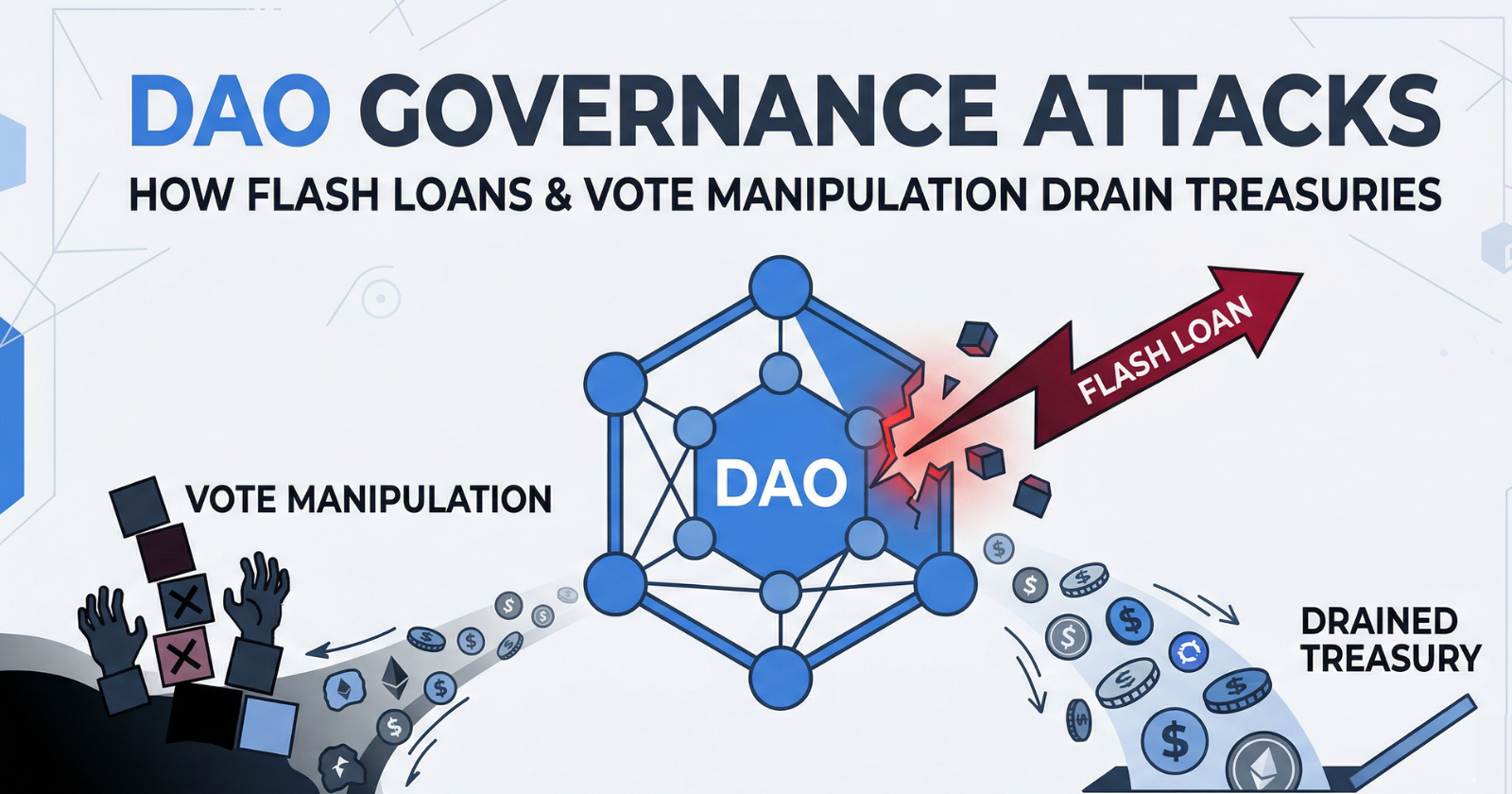
DAO governance attacks: how flash loans and vote manipulation drain treasuries
How attackers exploit DAO governance with flash loans, EVM opcode injection, and quorum exhaustion — plus audit strategies and defense architectures.

Top DEX Security Analysis: AMM Vulnerabilities Exposed
AMM security deep dive Part 2: how Uniswap V2–V4, Curve, and Balancer handle capital efficiency — and the slippage, sandwich, and oracle manipulation risks each introduces.
Need expert guidance on Vote-Escrowed Token?
Our team at Zealynx has deep expertise in blockchain security and DeFi protocols. Whether you need an audit or consultation, we're here to help.
Get a Quote