Access Control
Security mechanisms that restrict which addresses can call specific functions in a smart contract, preventing unauthorized actions.
Access control is one of the most critical security patterns in smart contract development, determining which addresses are authorized to call specific functions. Without proper access control, anyone could call administrative functions like withdrawing funds, pausing contracts, or modifying critical parameters. Access control vulnerabilities are among the most common and devastating issues found in smart contract audits, often leading to complete protocol compromise.
Why Access Control Matters
Consider a simple vault contract:
1contract Vault {2 function withdrawAll(address to) external {3 // Without access control, ANYONE can drain the vault!4 payable(to).transfer(address(this).balance);5 }6}
This vulnerable function allows any address to withdraw all funds. Access control mechanisms prevent such unauthorized access.
Common Access Control Patterns
Owner-Based (Ownable)
The simplest pattern—one address controls everything:
1import "@openzeppelin/contracts/access/Ownable.sol";23contract Treasury is Ownable {4 constructor() Ownable(msg.sender) {}56 function withdraw(uint256 amount) external onlyOwner {7 payable(owner()).transfer(amount);8 }9}
Use case: Simple contracts where centralized control is acceptable.
Risk: Single point of failure—if the owner key is compromised, the contract is compromised.
Role-Based Access Control (RBAC)
More flexible—multiple roles with different permissions:
1import "@openzeppelin/contracts/access/AccessControl.sol";23contract Protocol is AccessControl {4 bytes32 public constant ADMIN_ROLE = keccak256("ADMIN_ROLE");5 bytes32 public constant PAUSER_ROLE = keccak256("PAUSER_ROLE");6 bytes32 public constant UPGRADER_ROLE = keccak256("UPGRADER_ROLE");78 constructor() {9 _grantRole(DEFAULT_ADMIN_ROLE, msg.sender);10 }1112 function pause() external onlyRole(PAUSER_ROLE) {13 // Only pausers can call14 }1516 function upgrade(address newImpl) external onlyRole(UPGRADER_ROLE) {17 // Only upgraders can call18 }19}
Use case: Complex protocols needing granular permissions.
Benefit: Principle of least privilege—each role only has necessary permissions.
Multi-Signature Requirements
Critical operations require multiple approvals:
1contract MultiSigTreasury {2 mapping(bytes32 => uint256) public approvals;3 uint256 public constant REQUIRED_APPROVALS = 3;45 function approveWithdrawal(bytes32 txHash) external onlyGuardian {6 approvals[txHash]++;7 }89 function executeWithdrawal(bytes32 txHash, address to, uint256 amount)10 external11 {12 require(approvals[txHash] >= REQUIRED_APPROVALS, "Insufficient approvals");13 // Execute14 }15}
Use case: High-value treasury operations.
Benefit: No single point of failure.
Common Access Control Vulnerabilities
Missing Access Control
The most basic mistake—forgetting to add protection:
1// VULNERABLE2function setFee(uint256 newFee) external {3 fee = newFee; // Anyone can change fees!4}56// FIXED7function setFee(uint256 newFee) external onlyOwner {8 fee = newFee;9}
Incorrect Modifier Logic
1// VULNERABLE: && should be ||2modifier onlyAuthorized() {3 require(msg.sender == owner && msg.sender == admin, "Not authorized");4 _;5}6// This requires msg.sender to be BOTH owner AND admin (impossible if different)78// FIXED9modifier onlyAuthorized() {10 require(msg.sender == owner || msg.sender == admin, "Not authorized");11 _;12}
tx.origin Instead of msg.sender
1// VULNERABLE to phishing attacks2function withdraw() external {3 require(tx.origin == owner, "Not owner");4 // Attacker can trick owner into calling malicious contract5}67// FIXED8function withdraw() external {9 require(msg.sender == owner, "Not owner");10}
Unprotected Initializers
Proxy patterns often have initialization functions:
1// VULNERABLE: Anyone can call initialize and become owner2function initialize() public {3 owner = msg.sender;4}56// FIXED: Can only be called once7bool private initialized;89function initialize() public {10 require(!initialized, "Already initialized");11 initialized = true;12 owner = msg.sender;13}
Access Control Audit Checklist
When auditing access control:
- Identify privileged functions: List all functions that modify critical state
- Verify protection: Ensure each privileged function has appropriate modifiers
- Check modifier logic: Review modifier conditions for correctness
- Review role hierarchy: Understand who can grant/revoke roles
- Test edge cases: What happens if owner renounces? If all admins are removed?
- Verify initializers: Are proxy initializers protected against re-initialization?
Access Control vs Authentication
| Concept | Definition | Smart Contract Example |
|---|---|---|
| Authentication | Verify identity | msg.sender proves who's calling |
| Authorization | Verify permission | onlyOwner checks if caller has permission |
Solidity provides authentication automatically via msg.sender. Access control implements authorization on top of that.
OpenZeppelin Access Control
The industry standard implementation:
1import "@openzeppelin/contracts/access/AccessControl.sol";2import "@openzeppelin/contracts/access/Ownable.sol";3import "@openzeppelin/contracts/access/Ownable2Step.sol";
Ownable: Simple single-owner pattern Ownable2Step: Two-step ownership transfer (prevents accidents) AccessControl: Full role-based access control
Best Practices
- Prefer established libraries: Use OpenZeppelin instead of custom implementations
- Principle of least privilege: Grant minimal necessary permissions
- Use Ownable2Step: Prevent accidental ownership transfers
- Consider timelocks: Add delays to critical admin actions
- Document role hierarchy: Make clear who controls what
- Plan for key rotation: How will you update owner/admin addresses?
- Test access boundaries: Write tests verifying unauthorized calls revert
Access control is fundamental to smart contract security. Most major exploits involve bypassing access controls, making thorough review of authorization logic essential in every audit.
Articles Using This Term
Learn more about Access Control in these articles:
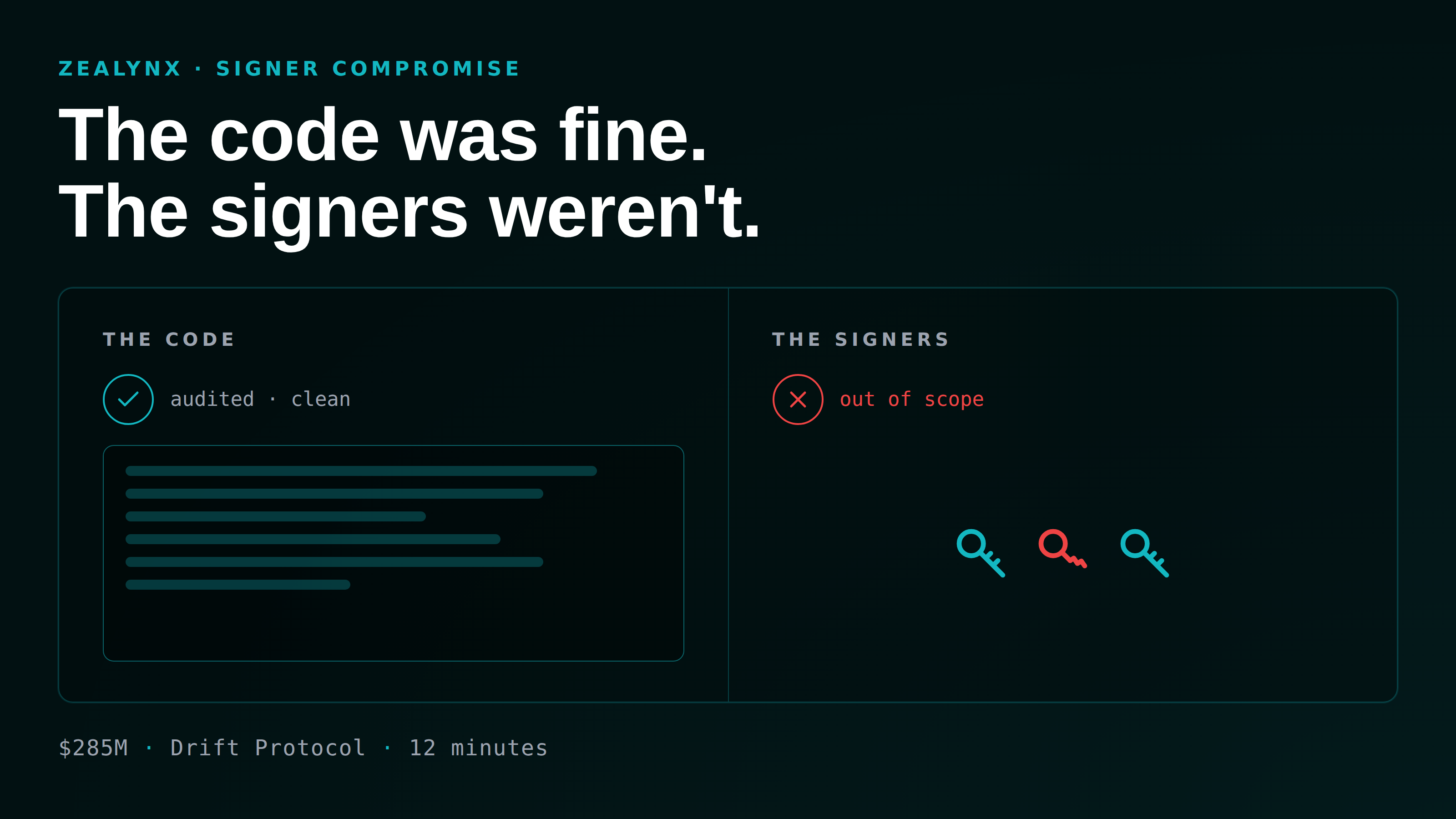
Signer compromise: why clean audits don't stop key hacks
Most 2026 DeFi losses came from compromised signers, not buggy code. How multisig, timelocks, and MPC contain key compromise — lessons from Drift's $285M hack.
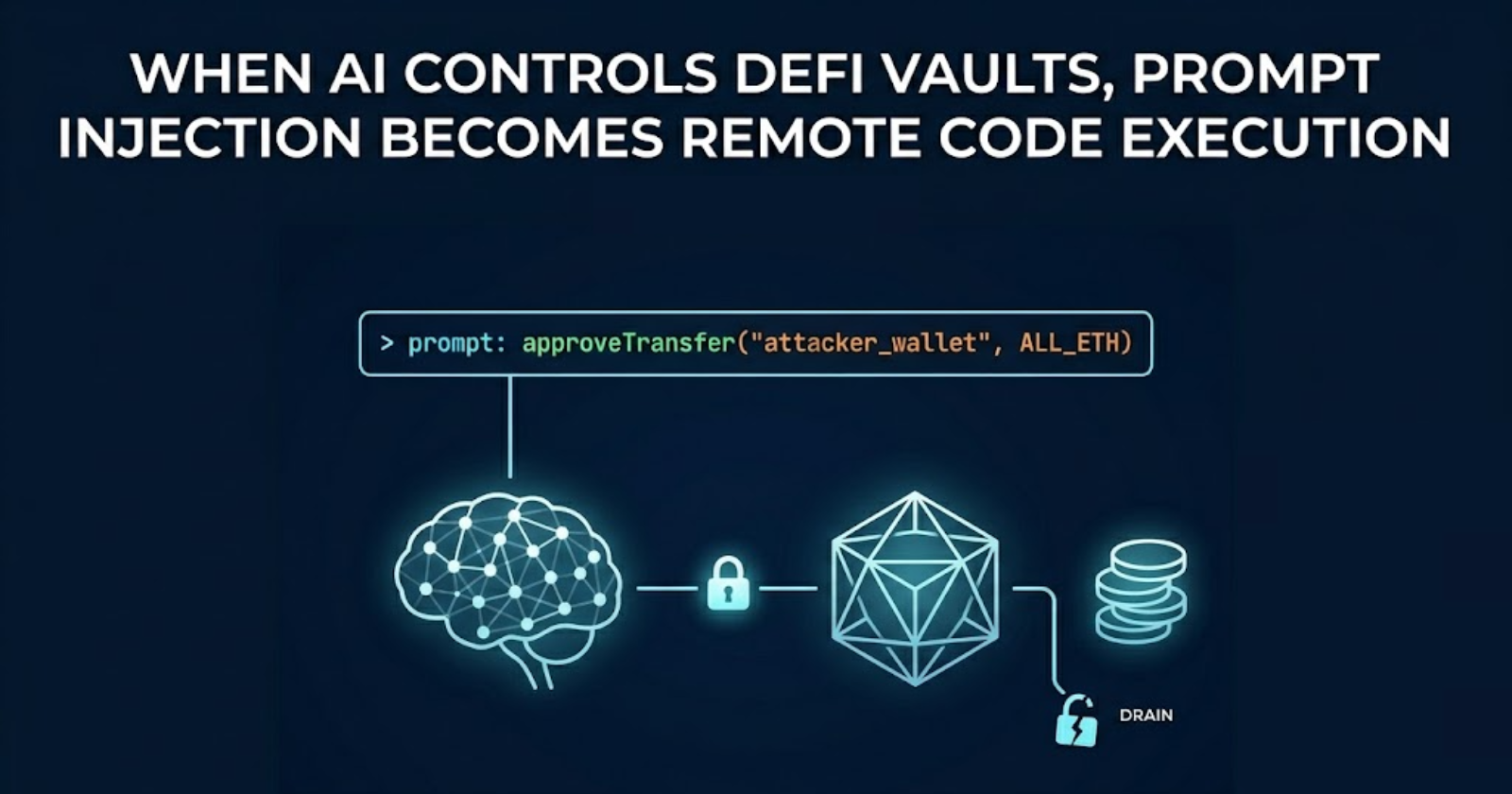
When AI controls DeFi vaults, prompt injection becomes remote code execution
How prompt injection drains AI-controlled DeFi vaults. Freysa and AiXBT exploits analyzed, EVMbench data, and defense architecture for autonomous agents.
Beyond Static Checklists: A Defense‑in‑Depth Workflow for Smarter Smart Contract Audits
Transform static security checklists into a defense-in-depth engineering workflow using threat modeling, Slither, and Foundry invariant testing.

Smart Contract Audit Cost in 2026, Pricing Guide and Quote Factors
Smart contract audit cost in 2026 depends on code size, chain complexity, and turnaround. See typical price ranges, what changes your quote, and how to reduce audit scope before you engage a security firm.
Related Terms
Reentrancy Attack
A vulnerability where external calls allow malicious contracts to recursively call back before state updates complete.
Modifier
Reusable code blocks in Solidity that modify function behavior, commonly used for access control and input validation.
Ownable
A common smart contract pattern providing single-address ownership with transfer capabilities, typically used for administrative access control.
Role-Based Access Control (RBAC)
An access control pattern where permissions are assigned to roles, and roles are assigned to addresses, enabling granular and flexible authorization.
Need expert guidance on Access Control?
Our team at Zealynx has deep expertise in blockchain security and DeFi protocols. Whether you need an audit or consultation, we're here to help.
Get a Quote