Reentrancy Attack
A vulnerability where external calls allow malicious contracts to recursively call back before state updates complete.
A Reentrancy Attack is a vulnerability where external calls allow malicious contracts to recursively call back before state updates complete.
Attack Mechanism Explained
Reentrancy exploits occur through a specific sequence of contract interactions. Contract A initiates an external call to Contract B, transferring control flow to the external contract. Before Contract A completes its state updates, Contract B recursively calls back into Contract A, re-entering the original contract while it remains in an inconsistent state. This allows Contract B to exploit invariants that Contract A assumes are maintained but have not yet been enforced through state updates. The vulnerability arises from the fundamental property that external calls transfer execution control before the calling contract finalizes its state changes.
The DAO Hack: Historical Context
The most notorious reentrancy attack targeted The DAO in 2016, resulting in theft of over $60 million in ETH. The severity and systemic implications of this exploit led to the controversial Ethereum hard fork that created the ETH/ETC split, fundamentally shaping blockchain governance debates. The attacker exploited a withdrawal function that updated user balances only after transferring funds, enabling recursive withdrawal calls that drained the contract. Each reentrant call executed before balance updates, allowing the attacker to withdraw the same funds repeatedly until the contract was depleted.
Vulnerable Pattern
1function withdraw() external {2 uint256 amount = balances[msg.sender];3 // External call BEFORE state update4 (bool success, ) = msg.sender.call{value: amount}("");5 require(success);6 balances[msg.sender] = 0; // TOO LATE!7}
Protection Mechanisms
1. Checks-Effects-Interactions Pattern
1function withdraw() external {2 uint256 amount = balances[msg.sender];3 balances[msg.sender] = 0; // Update state FIRST4 (bool success, ) = msg.sender.call{value: amount}("");5 require(success);6}
2. Reentrancy Guards
1modifier nonReentrant() {2 require(!locked);3 locked = true;4 _;5 locked = false;6}
Comprehensive Protection Strategies
Defending against reentrancy requires multiple layers of security practices. Always update state before external calls following the Checks-Effects-Interactions pattern, ensuring contract invariants are established before transferring control. Utilize battle-tested libraries like OpenZeppelin's ReentrancyGuard, which provides standardized mutex implementations that prevent recursive calls.
Limit external calls to trusted contracts when possible, though recognize that trust assumptions can be violated through proxy patterns or compromised implementations. Comprehensive testing with malicious contracts should simulate reentrant attack scenarios, verifying that protection mechanisms function correctly. Thorough auditing of all external call patterns must identify every location where control transfers to untrusted code, ensuring appropriate safeguards exist at each interaction point.
Articles Using This Term
Learn more about Reentrancy Attack in these articles:
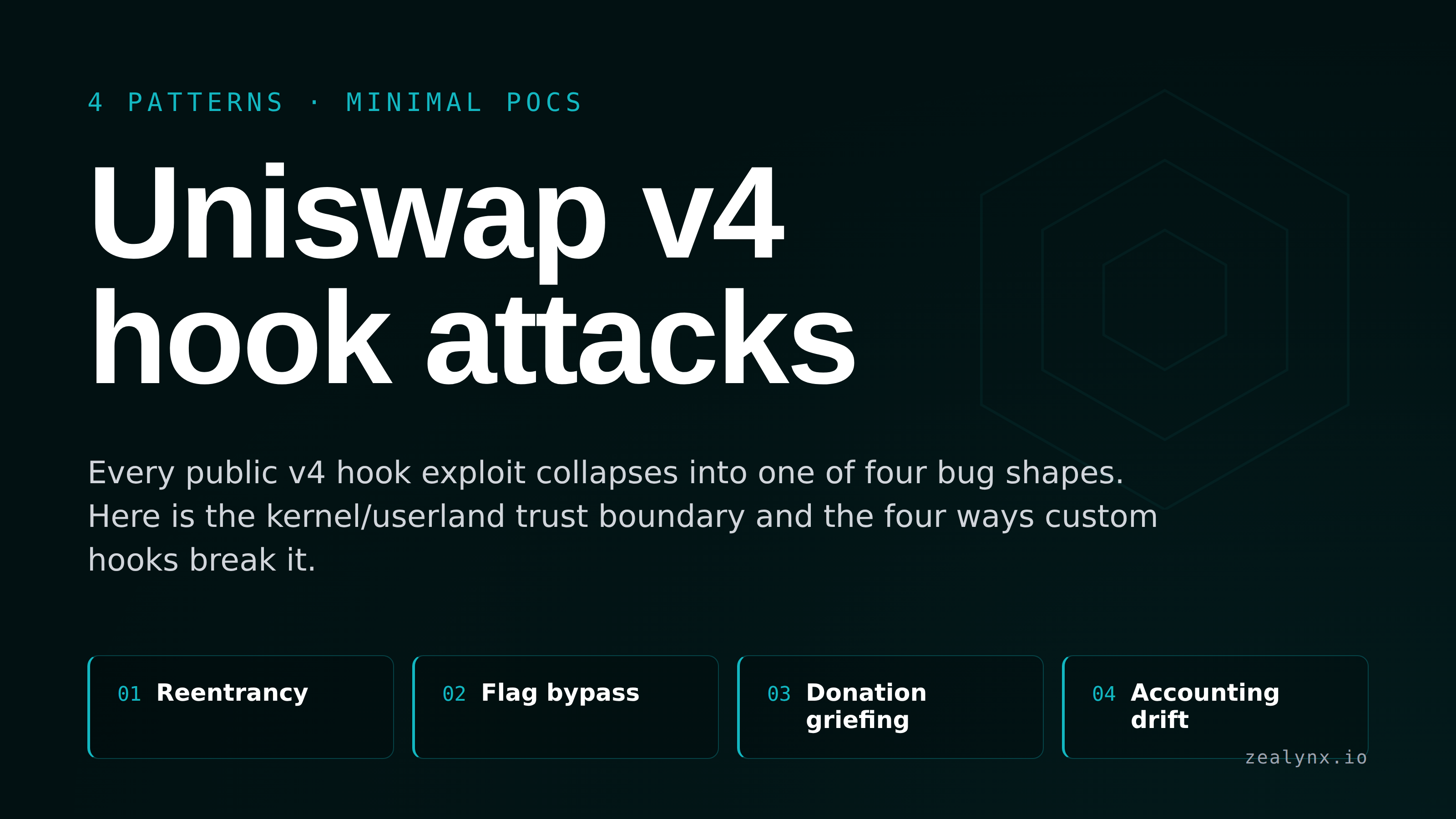
Uniswap v4 hook attacks: 4 exploit patterns with PoCs
The four Uniswap v4 hook attack patterns that cover every public exploit: reentrancy, flag bypass, donation griefing, accounting drift — with minimal PoCs.
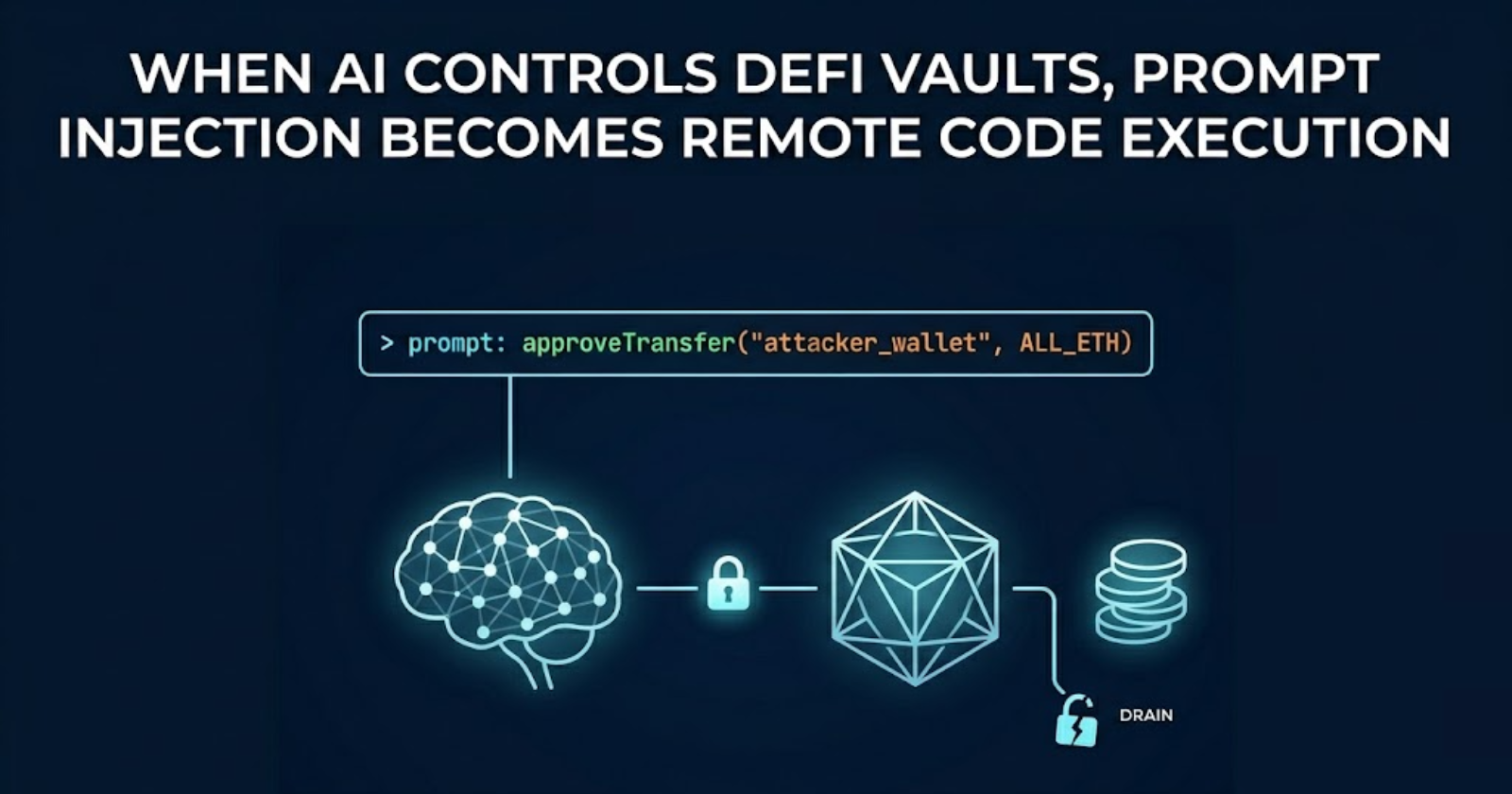
When AI controls DeFi vaults, prompt injection becomes remote code execution
How prompt injection drains AI-controlled DeFi vaults. Freysa and AiXBT exploits analyzed, EVMbench data, and defense architecture for autonomous agents.
Uniswap v4 Security Guide: Hooks, Risks, and Audit Path
Uniswap v4 security guide for hook risk, singleton architecture, and flash accounting. See what builders should audit before launch.
Related Terms
Hooks
External smart contracts in Uniswap v4 that execute custom logic at specific points in a pool's lifecycle.
Automated Market Maker (AMM)
A decentralized exchange protocol that uses mathematical formulas to price assets instead of order books.
Singleton Architecture
A design pattern where all pools are managed within a single unified contract, reducing gas costs.
Need expert guidance on Reentrancy Attack?
Our team at Zealynx has deep expertise in blockchain security and DeFi protocols. Whether you need an audit or consultation, we're here to help.
Get a Quote