AI Agent
Autonomous software system powered by a large language model that can perceive, reason, and execute actions — including signing blockchain transactions — without continuous human oversight.
An AI agent is an autonomous software system that uses a large language model (LLM) as its reasoning engine to perceive its environment, make decisions, and execute actions with minimal or no human intervention. In the context of Web3 and DeFi, AI agents are increasingly deployed with direct control over blockchain wallets, enabling them to autonomously trade, manage liquidity, execute governance votes, and interact with smart contracts.
Architecture of a DeFi AI agent
A typical autonomous agent operating in DeFi consists of four layers:
- Input layer: ingests commands and data from external sources — Discord, Telegram, APIs, oracle feeds, and on-chain events
- Context management: maintains state through conversation history, vector databases, or RAG systems that provide the agent with relevant knowledge
- Reasoning engine: the foundation model (GPT-4/5, Claude, etc.) that evaluates context and decides the next action, typically emitting structured tool-calls or function calls
- Execution layer: constructs transaction calldata, signs with managed private keys or through ERC-4337 account abstraction, and broadcasts to the blockchain network
Security implications
The core security risk of AI agents stems from the fundamental mismatch between deterministic blockchain execution and probabilistic LLM reasoning. A smart contract executes exactly what the calldata specifies — with no ambiguity. The LLM that generated that calldata, however, can be manipulated through prompt injection attacks.
When an AI agent has signing authority over a wallet, compromising the agent's reasoning is functionally equivalent to remote code execution — the attacker achieves unauthorized transaction execution without exploiting a single line of smart contract code.
Notable incidents include:
- Freysa (November 2024): A prompt injection attack redefined the agent's tool-call semantics, causing it to drain 13.19 ETH from its own treasury while believing it was accepting a deposit
- AiXBT (March 2025): Attackers compromised the bot's Web2 admin panel and injected instructions that drained 55.5 ETH — the AI functioned correctly, but the infrastructure around it was breached
Defense architecture
The recommended approach to securing AI agents in DeFi follows the principle of separation of concerns:
- The LLM generates transaction proposals (passive intents), never executable calldata directly
- A deterministic validation module — outside the model's context — checks proposals against hard-coded rules
- Transaction signing occurs in an isolated Trusted Execution Environment (TEE) that does not accept natural-language input
- High-value transactions require multisig approval with explicit human participation (human-in-the-loop)
Additionally, adopting the Model Context Protocol (MCP) for external data integrations and enforcing zero trust across all administrative interfaces reduces the attack surface for both direct and indirect prompt injection.
Related reading
Articles Using This Term
Learn more about AI Agent in these articles:
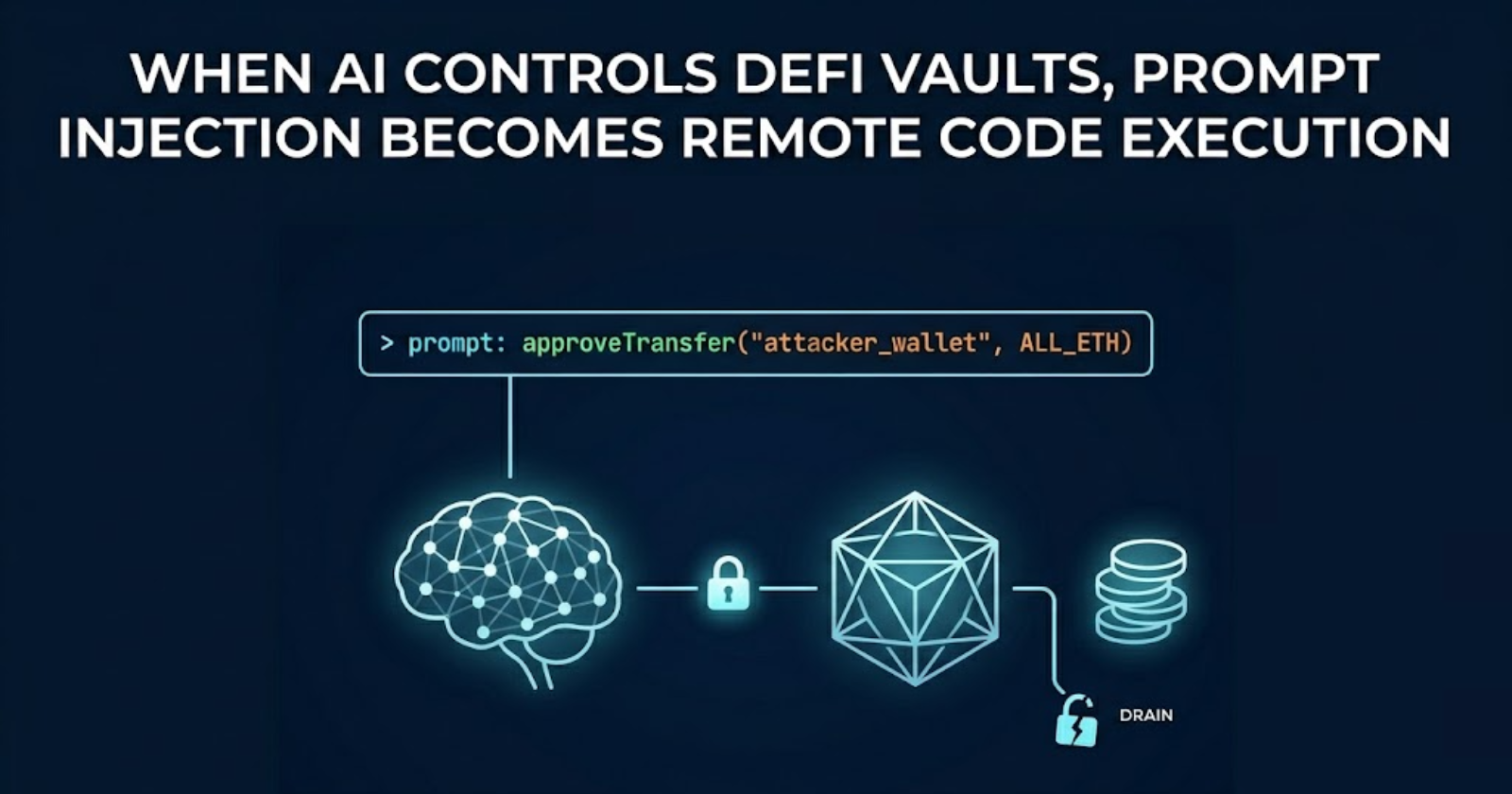
When AI controls DeFi vaults, prompt injection becomes remote code execution
How prompt injection drains AI-controlled DeFi vaults. Freysa and AiXBT exploits analyzed, EVMbench data, and defense architecture for autonomous agents.
Why AI Red Teaming Is No Longer Optional in Today's Security Landscape
AI systems are now business-critical infrastructure making decisions, triggering actions, and interacting with sensitive data at scale. Traditional security testing approaches are failing to address this expanded attack surface. Learn why AI red teaming has become essential.
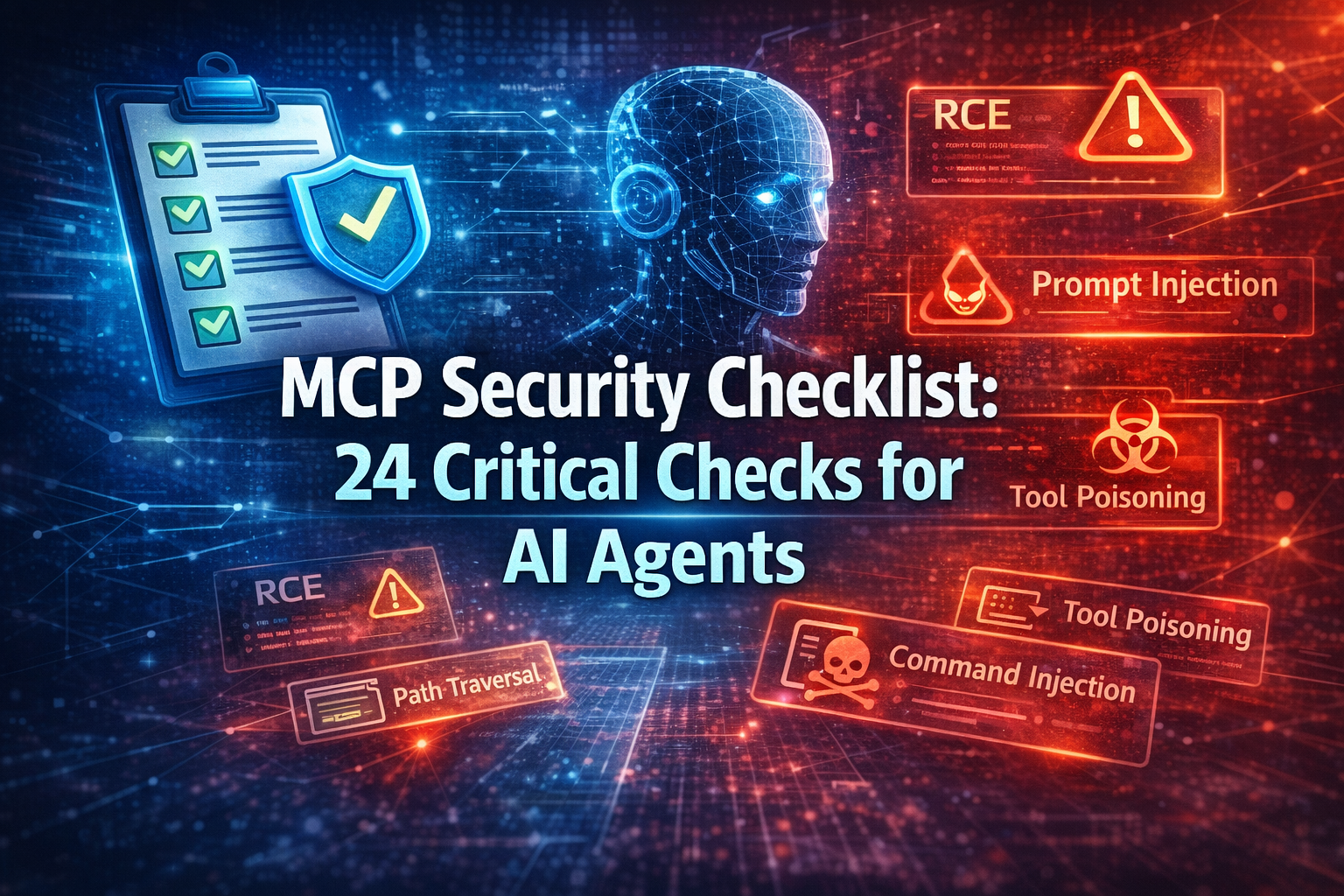
MCP Security Guide: 24 Checks for AI Agents & MCP Servers
Long-form MCP security guide covering 24 critical checks for AI agents and MCP servers. Learn breach patterns, tool poisoning risks, prompt injection defenses, and hardening priorities.
Why AI Penetration Testing Is Now Critical in Web3 Security
AI is already integrated into DAOs, dApps, and smart contracts. Find out why AI red teaming is the next frontier in Web3 cybersecurity and compliance.
Related Terms
LLM
Large Language Model - AI system trained on vast text data to generate human-like responses and perform language tasks.
Prompt Injection
Attack technique manipulating AI system inputs to bypass safety controls or extract unauthorized information.
RAG
Retrieval-Augmented Generation - AI architecture combining language models with external knowledge retrieval systems.
Trusted Execution Environment (TEE)
Hardware-isolated secure area within a processor that guarantees code and data integrity, used in blockchain for confidential computation and key management.
Red Teaming
Security testing methodology simulating real-world attacks to identify vulnerabilities before malicious actors exploit them.
Need expert guidance on AI Agent?
Our team at Zealynx has deep expertise in blockchain security and DeFi protocols. Whether you need an audit or consultation, we're here to help.
Get a Quote