Forced Transfer
Administrative capability allowing issuers or controllers to move security tokens without the holder's private key, required for regulatory compliance and legal enforcement.
Forced Transfer is an administrative function in security token standards that allows authorized controllers (issuers, agents, or regulated entities) to move tokens between addresses without requiring the token holder's private key or approval. This capability is a fundamental requirement for Real-World Asset (RWA) tokenization because regulated securities must remain subordinate to legal authority. Courts can order asset seizures, regulators can freeze accounts, and inheritance laws can mandate ownership transfers, all of which require the blockchain ledger to be mutable by a higher authority.
The concept directly implements the principle of sovereign recourse: legal ownership supersedes cryptographic possession. Without forced transfer capabilities, a tokenized security could become permanently unreachable if the holder loses their private key, dies without sharing credentials, or is subject to a court order that the blockchain cannot enforce.
Implementation in Token Standards
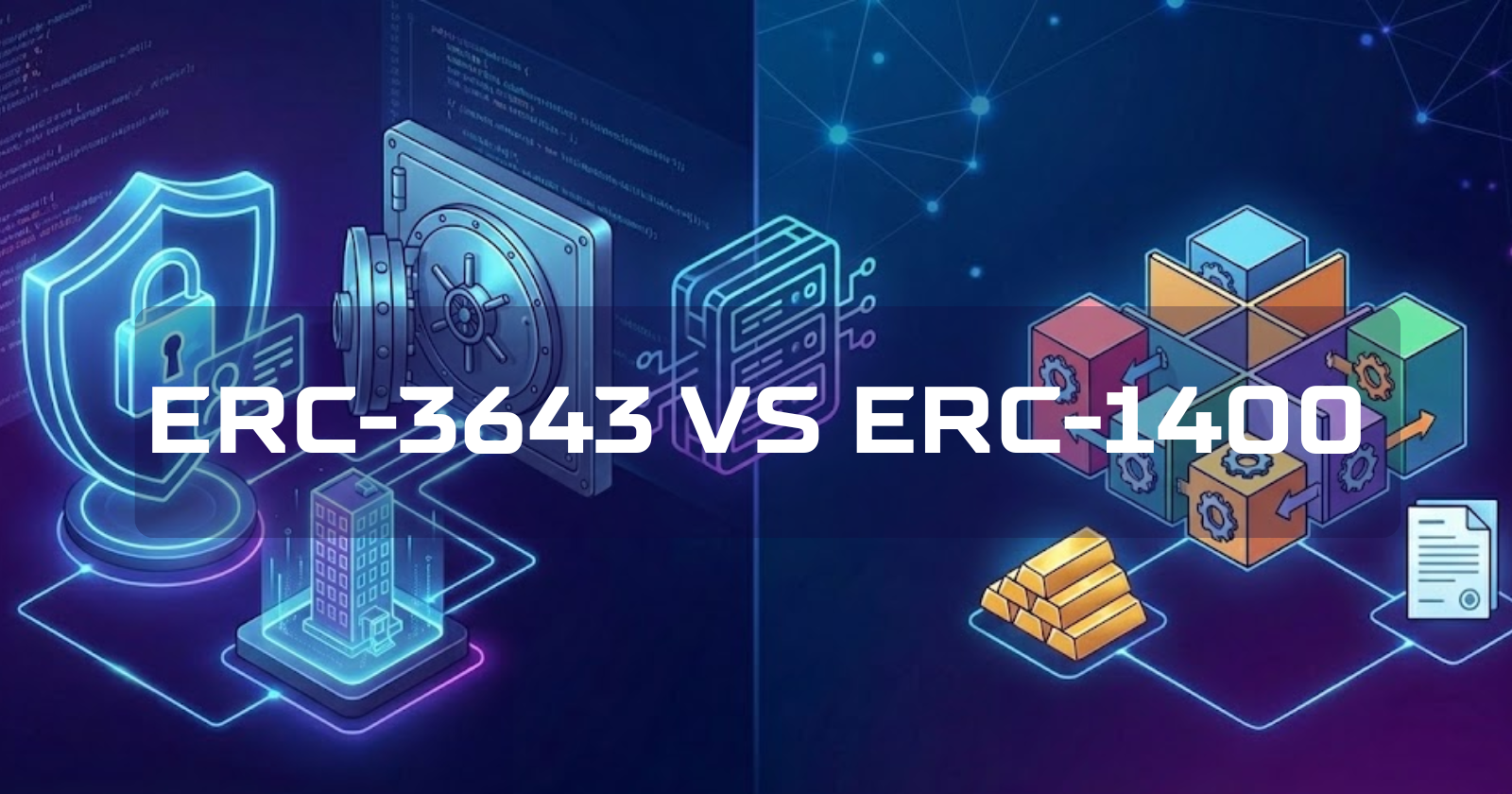
Both major security token standards implement forced transfers, though with different architectural approaches.
ERC-3643 (T-REX) implements forced transfers through an Agent role system. Designated agents can execute transfers on behalf of any holder, bypassing the standard compliance checks that govern regular transfers. The agent role is typically assigned to a multisig wallet or a smart contract with additional authorization logic rather than a single externally owned account (EOA). The ONCHAINID identity framework ensures that even forced transfers maintain an identity-aware audit trail.
ERC-1400 implements forced transfers through the Controller pattern defined in its sub-standard ERC-1644. Controllers can execute controllerTransfer operations that move tokens between any addresses. Critically, ERC-1644 requires that every forced transfer emits a ControllerTransfer event containing a data field where the controller should include a reference to the legal authorization (such as a court order hash), providing an immutable on-chain audit trail.
1// ERC-1644 Controller Transfer2function controllerTransfer(3 address from,4 address to,5 uint256 value,6 bytes calldata data, // Legal authorization reference7 bytes calldata operatorData8) external onlyController;910// Emitted event for audit trail11event ControllerTransfer(12 address controller,13 address indexed from,14 address indexed to,15 uint256 value,16 bytes data,17 bytes operatorData18);
Security Considerations
Forced transfer capabilities represent the single most dangerous administrative function in any security token system. An attacker who compromises the controller role gains the ability to seize any token holder's assets instantly and irrevocably.
Single point of failure risk is the primary concern. If the controller role is held by a single EOA, one successful phishing attack, private key theft, or social engineering exploit gives the attacker god-mode access over the entire token supply. Every holder's assets are at risk simultaneously, making this a catastrophic failure mode.
Recommended mitigations include assigning the controller role to a multi-signature wallet (such as Gnosis Safe) with a minimum threshold of 3-of-5 or higher signers, implementing a timelock that delays forced transfer execution by 24-48 hours to allow detection and intervention, integrating a legal oracle that requires cryptographic proof of a valid legal instrument before authorizing the transfer, and maintaining comprehensive off-chain logging that correlates every forced transfer with its legal justification.
Audit trail integrity is essential for regulatory compliance. Every forced transfer should emit detailed events that include the controller's identity, the legal basis for the transfer, and sufficient data to reconstruct the authorization chain. Without this audit trail, the issuer cannot demonstrate to regulators that forced transfers were executed lawfully.
Legal and Regulatory Context
Forced transfers are not an optional feature for regulated securities. Multiple legal frameworks require issuers to maintain the ability to override token holder custody. Court-ordered asset seizures during litigation or criminal proceedings require immediate issuer action. Estate and inheritance transfers must proceed regardless of whether heirs have access to the decedent's private keys. Regulatory freezes under sanctions programs like OFAC require issuers to prevent any movement of flagged assets. Corporate actions such as stock splits, mergers, or share buybacks may require involuntary position changes.
The challenge for RWA platforms is implementing these legally mandated capabilities without creating unacceptable security risks. The most robust approach combines technical controls (multisig, timelocks, legal oracles) with operational procedures (dual authorization, segregation of duties) and transparent governance (published policies, regular audits of controller actions).
Articles Using This Term
Learn more about Forced Transfer in these articles:
Related Terms
Sovereign Recourse
The principle that legal ownership supersedes blockchain possession, requiring token standards to support administrative overrides that reflect off-chain legal reality.
ERC-3643
A token standard for permissioned security tokens that integrates identity verification and compliance checks directly into transfer logic.
Security Token
Blockchain-based representation of regulated securities (equity, debt, real estate) requiring transfer restrictions and investor verification under securities law.
Legal Oracle
An on-chain verification mechanism that requires a cryptographic proof of a legal instrument (e.g., court order hash) before authorizing privileged administrative actions like forced transfers.
Need expert guidance on Forced Transfer?
Our team at Zealynx has deep expertise in blockchain security and DeFi protocols. Whether you need an audit or consultation, we're here to help.
Get a Quote