Reentrancy Guard
Smart contract security pattern preventing attackers from recursively calling functions to drain funds during execution.
Reentrancy Guards are smart contract security mechanisms that prevent reentrancy attacks—one of the most devastating vulnerability classes in smart contract security where attackers exploit recursive function calls to drain protocol funds before state updates complete. By using mutex-like locks that prevent functions from being called again while still executing, reentrancy guards block the attack pattern that caused The DAO hack ($60M loss in 2016) and numerous subsequent exploits. The pattern has become mandatory security infrastructure, with the article emphasizing that investors specifically look for "use of ReentrancyGuard" during technical due diligence as evidence developers understand EVM's adversarial nature.
The vulnerability emerged from Ethereum's external call semantics where calling other contracts or transferring ETH passes control flow to the recipient, potentially executing arbitrary code before the original function completes. If state updates (balance decrements, status flags) occur after external calls, attackers can reenter the function repeatedly before those updates take effect, exploiting stale state to extract funds multiple times. The famous DAO hack exploited precisely this pattern in the splitDAO function that transferred ETH before updating balances.
Reentrancy Attack Mechanics
The classic reentrancy pattern follows this sequence: (1) Victim contract calls attacker contract (e.g., via ETH transfer or external function call), (2) Attacker's fallback/receive function executes, (3) Attacker recursively calls back into victim contract's vulnerable function, (4) Victim function executes again using stale state (balances not yet updated from first call), (5) Attacker repeats until victim funds are drained or gas exhausts. Each recursive call operates on increasingly stale state, enabling extraction of multiples of legitimate withdrawal amounts.
Vulnerable code structure typically looks like this in Solidity:
1function withdraw() external {2 uint balance = userBalances[msg.sender];3 (bool success, ) = msg.sender.call{value: balance}("");4 require(success);5 userBalances[msg.sender] = 0; // State update AFTER external call6}
An attacker's contract would exploit this:
1fallback() external payable {2 if (address(victim).balance >= 1 ether) {3 victim.withdraw(); // Reenter before balance zeroed4 }5}
The attacker calls withdraw() once, but their fallback function recursively calls withdraw() multiple times before the balance gets zeroed, draining the entire contract. Each recursive call sees the original positive balance, enabling unlimited withdrawals until the contract empties.
Cross-function reentrancy represents more subtle variants where attackers don't reenter the same function but exploit shared state across different functions. If withdraw() and transfer() both check the same userBalance mapping, an attacker might trigger withdraw(), reenter through transfer() during the external call, and exploit the fact that neither function has updated the shared state yet. This cross-function attack pattern makes simple per-function locks insufficient—protocols need comprehensive reentrancy protection.
Read-only reentrancy exploits view functions that read stale state during external calls. Even if state-modifying functions are protected, attackers might exploit price oracle functions, balance queries, or valuation calculations that read inconsistent state mid-execution. For example, a lending protocol might call an external price oracle during collateral valuation; if that oracle reenters and queries the protocol's internal price view functions, it sees stale prices enabling manipulation.
Reentrancy Guard Implementation Patterns
OpenZeppelin ReentrancyGuard provides the industry-standard implementation using a status variable that tracks whether functions are executing:
1uint256 private _status = NOT_ENTERED;23modifier nonReentrant() {4 require(_status != ENTERED, "ReentrancyGuard: reentrant call");5 _status = ENTERED;6 _;7 _status = NOT_ENTERED;8}
Functions marked with nonReentrant modifier set status to ENTERED before execution and reset to NOT_ENTERED after completion. Reentrant calls see ENTERED status and revert, blocking the attack. This pattern incurs minimal gas overhead (~2,400 gas for storage updates) while providing comprehensive protection. The article's mention that investors verify "use of ReentrancyGuard" specifically refers to OpenZeppelin's implementation, which is audited and battle-tested.
Checks-Effects-Interactions pattern represents the complementary defensive programming approach. The pattern structures functions as: (1) Check all preconditions and inputs, (2) Make all state changes (effects), (3) Interact with external contracts. By updating state before external calls, even if reentrancy occurs, the attacker reenters seeing updated state rather than stale state, eliminating the attack vector:
1function withdraw() external {2 uint balance = userBalances[msg.sender];3 require(balance > 0, "No balance"); // Checks4 userBalances[msg.sender] = 0; // Effects (state update first)5 (bool success, ) = msg.sender.call{value: balance}(""); // Interactions6 require(success);7}
The article emphasizes "adherence to the Checks-Effects-Interactions pattern" alongside ReentrancyGuard because this pattern should be default code structure even with guards—defense in depth through multiple overlapping protections rather than single-point dependencies.
Function-specific versus contract-wide locks trade off granularity against gas costs. Contract-wide locks (like OpenZeppelin's default) prevent reentrancy across all protected functions, blocking legitimate concurrent operations but providing maximum safety. Function-specific locks enable fine-grained control where some functions remain callable during others' execution, but require careful analysis to ensure cross-function state consistency. Most protocols prefer contract-wide locks—the security benefit outweighs the marginal flexibility loss.
Reentrancy-safe libraries like OpenZeppelin's SafeERC20 provide wrappers around token operations ensuring safety even when interacting with malicious or non-standard tokens. These libraries combine reentrancy guards with proper error handling, return value verification, and standardized interfaces, simplifying secure external interactions.
Integration with TechDD and Investor Evaluation
Reentrancy protection verification appears as explicit investor checklist items. The article states investors look for "reentrancy protection" as evidence developers "understand the adversarial nature of the EVM." Investors or their technical partners review code for nonReentrant modifiers on functions performing external calls or ETH transfers, verify Checks-Effects-Interactions pattern adherence, and check that all external interactions consider reentrancy implications.
Historical vulnerability analysis during due diligence examines whether protocols ever suffered reentrancy attacks or had reentrancy findings in past audits. The article emphasizes examining "bug density at first review"—if initial audits found multiple reentrancy vulnerabilities, it signals poor security awareness. Investors interpret reentrancy findings as fundamental competency failures since the vulnerability is well-documented and easily preventable through established patterns.
Code pattern consistency matters more than single-instance protection. A protocol might protect main withdrawal functions with ReentrancyGuard but miss reentrancy risks in peripheral functions, keeper operations, or governance actions. Comprehensive TechDD reviews all external calls for consistent protection rather than spot-checking obvious functions. Inconsistent application of security patterns suggests copy-paste engineering without deep understanding.
Testing coverage requirements for reentrancy include explicit attack simulations. Investors want to see test suites with malicious contract examples attempting reentrancy attacks against all protected functions, cross-function reentrancy scenarios testing shared state consistency, and fuzzing campaigns specifically targeting reentrancy vectors. The absence of reentrancy-specific tests despite claiming protection suggests security theater rather than genuine security engineering.
Advanced Reentrancy Variants and Mitigations
Cross-contract reentrancy exploits shared state across multiple protocol contracts. If Contract A calls Contract B which calls back into Contract A, but they share storage variables or delegatecall relationships, reentrancy guards on individual contracts might not prevent exploitation. Protocols using complex multi-contract architectures must implement cross-contract reentrancy protection, often through shared reentrancy guard storage slots or careful state isolation.
Delegatecall reentrancy poses unique risks in proxy patterns. When implementation contracts use delegatecall, the storage context switches but execution continues, potentially bypassing reentrancy guards stored in one context while executing in another. Upgradeable contracts require carefully designed reentrancy protection that accounts for proxy architecture, ensuring guards persist across delegate contexts.
ERC-777 reentrancy vectors introduced new attack surfaces through hooks. ERC-777 tokens call receiver hooks on transfers, enabling reentrancy even when protocols expect simple ERC-20 transfers. Many protocols learned this lesson painfully after assuming transfers were safe external operations. Modern security practice treats all token operations as potentially reentrant, using ReentrancyGuard even for seemingly innocuous ERC-20 transfers since tokens might implement ERC-777 interfaces.
Flash loan reentrancy combinations enable single-transaction attacks combining flash loan capital with reentrancy vulnerabilities. Attackers borrow massive capital via flash loans, use it to exploit reentrancy-vulnerable functions with inflated balances or positions, then repay loans within the same transaction. This combination amplifies reentrancy damage from draining single user balances to draining entire protocol liquidity, making reentrancy protection even more critical in DeFi.
Gas Optimization and Performance Considerations
Storage versus memory guards trade security for gas efficiency. Storage-based guards (OpenZeppelin's approach) use persistent storage slots, incurring ~20,000 gas for initial writes but only ~2,900 gas for subsequent modifications. Memory or transient storage-based guards (proposed for Cancun upgrade) would be cheaper but must carefully handle storage contexts across external calls. Most protocols prefer storage guards despite costs—the security guarantee justifies the gas overhead.
Selective protection strategy applies guards only to vulnerable functions rather than blanket application. Pure view functions, functions without external calls, and tightly-controlled internal functions might not need reentrancy guards. This selective approach reduces gas costs but requires expert analysis to ensure no reentrancy paths exist. The article's emphasis on code reviews detecting "behavioral signs of lazy engineering" suggests investors prefer comprehensive protection over premature gas optimization—overly aggressive optimization often indicates poor security priorities.
Reentrancy-safe alternative patterns enable avoiding guards through architectural choices. Protocols using pull-over-push patterns where users initiate withdrawals rather than protocols pushing funds reduce external call attack surfaces. State machines with explicit status transitions prevent mid-execution state manipulation. These architectural approaches provide reentrancy safety without per-function guard overhead, though they require upfront design rather than bolt-on protections.
Common Implementation Mistakes
Missing guards on delegate calls represent frequent oversight. Developers might protect direct external calls but forget that delegatecall allows arbitrary code execution in the contract's context, creating reentrancy opportunities. All delegatecall operations should occur within reentrancy-protected contexts or use isolated storage carefully designed to prevent exploitation.
Incomplete protection of function families occurs when developers guard primary functions but miss auxiliary entry points. A lending protocol might protect borrow() and withdraw() but leave liquidate() or flashLoan() unprotected, creating alternate reentrancy paths attackers exploit. Comprehensive security requires systematically identifying all external call sites and ensuring appropriate protection.
Cross-modifier interference can occur in complex contract hierarchies. If multiple modifiers manipulate shared state or execution flow, reentrancy guards might not trigger as expected. Developers must carefully order modifiers and understand their interactions, particularly when combining OpenZeppelin's ReentrancyGuard with custom access control or pausable patterns.
False security from ineffective patterns emerges when teams implement custom reentrancy protection incorrectly. Common mistakes include using local variables instead of storage for status tracking (resets across calls), checking status after external calls instead of before (useless after reentrancy occurs), or implementing locks that don't actually prevent execution (only logging or warning). The article's emphasis on using established libraries reflects this—custom security implementations frequently contain subtle bugs that audited libraries avoid.
Auditing and Verification Approaches
Automated detection tools like Slither, Mythril, and Securify identify many reentrancy vulnerabilities through static analysis. These tools detect state modifications after external calls, missing ReentrancyGuard modifiers on functions with external calls, and suspicious call patterns. However, automated tools miss subtle variants—complex cross-function reentrancy, delegatecall context issues, and read-only reentrancy require manual analysis by experienced auditors.
Formal verification can prove reentrancy safety mathematically. Tools like Certora enable writing specifications that state "no function shall execute twice in the same transaction" or "balance updates always precede external calls," then mechanically verifying code satisfies these properties. While expensive and time-consuming, formal verification provides highest assurance for critical components like custody logic or treasury management.
Runtime monitoring through services like Forta can detect reentrancy attack attempts in production. Monitoring agents track recursive call patterns, unusually deep call stacks, or rapid-fire function executions characteristic of reentrancy exploitation. While unable to prevent attacks, monitoring enables rapid incident response and can trigger automatic circuit breakers pausing protocols during suspicious activity.
Understanding reentrancy guards is fundamental to smart contract security and investor confidence. The article's inclusion of reentrancy protection on the explicit investor checklist reflects how this decades-old vulnerability class remains critically relevant. Protocols without comprehensive reentrancy protection signal fundamental security competency gaps that sophisticated investors immediately recognize. Combined with Checks-Effects-Interactions pattern adherence, proper reentrancy guards represent baseline security expectations rather than advanced protective measures—their absence is disqualifying rather than their presence being impressive.
Articles Using This Term
Learn more about Reentrancy Guard in these articles:
Uniswap v4 hook attacks: 4 exploit patterns with PoCs
The four Uniswap v4 hook attack patterns that cover every public exploit: reentrancy, flag bypass, donation griefing, accounting drift — with minimal PoCs.
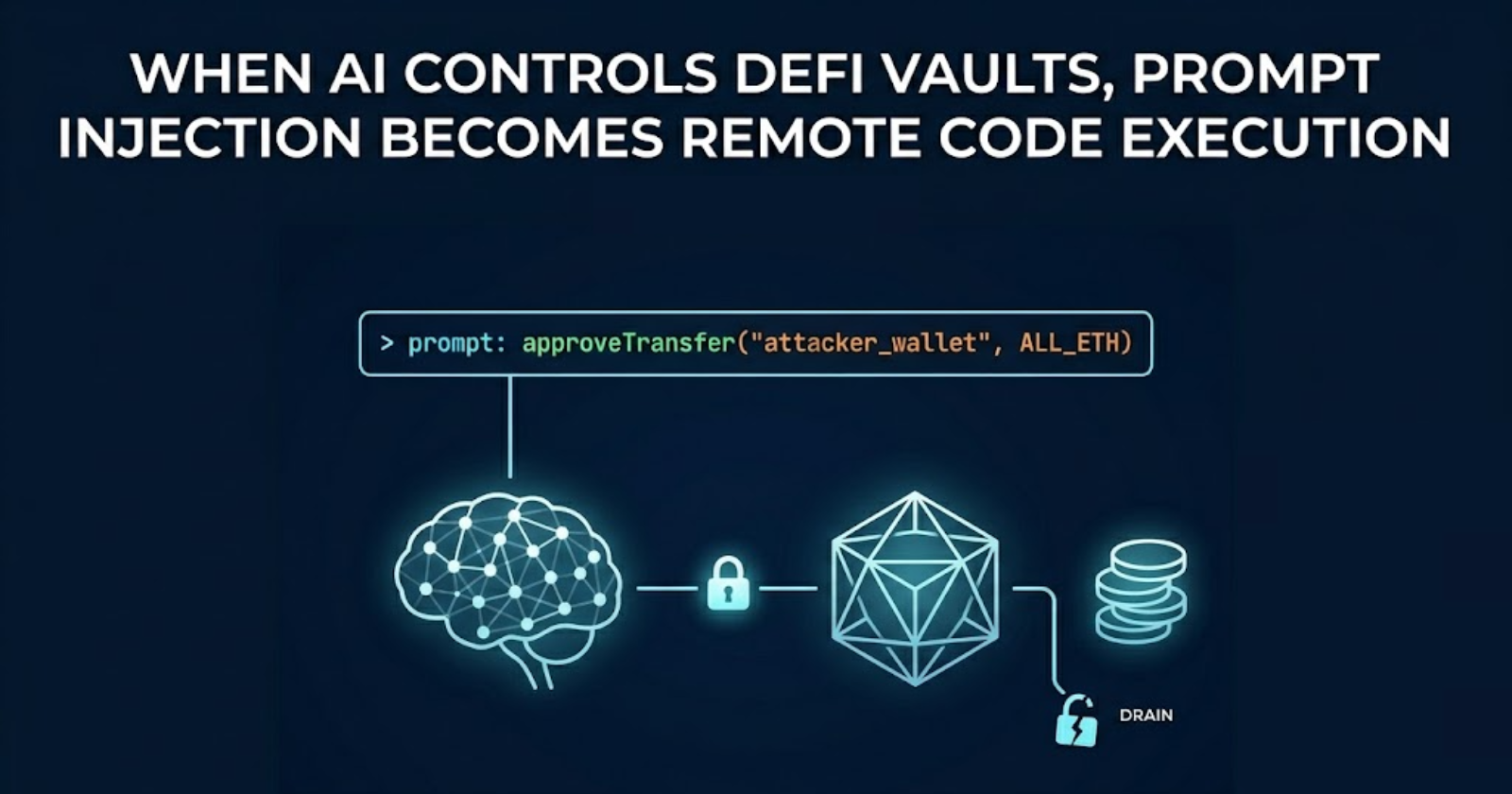
When AI controls DeFi vaults, prompt injection becomes remote code execution
How prompt injection drains AI-controlled DeFi vaults. Freysa and AiXBT exploits analyzed, EVMbench data, and defense architecture for autonomous agents.

Smart Contract Audit ROI: Investor Due Diligence Guide
Discover how smart contract audits impact valuation during technical due diligence. Learn what investors look for in audit reports, which security firms matter, and red flags that kill funding rounds for Web3 startups.
Related Terms
Need expert guidance on Reentrancy Guard?
Our team at Zealynx has deep expertise in blockchain security and DeFi protocols. Whether you need an audit or consultation, we're here to help.
Get a Quote