TVL
Total Value Locked representing the aggregate dollar value of assets deposited in a DeFi protocol at any given time.
Total Value Locked (TVL) represents the aggregate dollar value of all assets deposited into a DeFi protocol at any given time, serving as the primary metric for measuring protocol adoption, liquidity depth, and potential exploit impact. TVL aggregates deposits across lending pools, liquidity provider positions, staked assets, collateral in vaults, and any other user funds the protocol controls or facilitates. For security discussions, TVL indicates the "funds at risk"—the maximum potential loss if the protocol suffers catastrophic exploit. The article emphasizes that bug bounty rewards should be "proportional to your TVL," with inadequate bounties (e.g., $50K max on $100M TVL protocols) signaling insufficient security investment to investors.
The metric gained prominence during DeFi Summer 2020 when protocols like Compound, Aave, and Uniswap saw explosive growth. DeFi Pulse (now DefiLlama) popularized TVL tracking, providing standardized measurement across protocols. TVL quickly became the primary comparative metric—higher TVL suggested greater user trust, network effects, and protocol maturity. However, TVL's simplicity masks nuances: two protocols with identical TVL might have vastly different risk profiles, revenue models, or capital efficiency.
TVL Calculation Methodologies
Direct custody calculation sums all assets the protocol directly controls through smart contracts. For lending protocols like Aave, TVL includes all deposited collateral and lent assets. For Uniswap liquidity pools, TVL aggregates both tokens in all pool pairs. For yield aggregators like Yearn, TVL includes all vault deposits. This straightforward approach works well for single-chain protocols with transparent on-chain state.
Cross-chain TVL aggregation requires summing deposits across multiple networks. Protocols like SushiSwap or Curve operating on Ethereum, Polygon, Arbitrum, and other chains must aggregate TVL across all deployments. This raises questions: should bridge assets be counted on both source and destination chains (double-counting), or only on one side? Industry standard counts bridge-wrapped assets only on destination chains to avoid inflation.
Double-counting issues affect protocols with recursive relationships. If Protocol A deposits into Protocol B, and Protocol B reports those deposits as TVL, does Protocol A also count them? Pure aggregation would count the same capital twice. DefiLlama addresses this by tracking "double-counted TVL" separately, though definitions vary across aggregators. The article's discussion of formal verification for bridges reflects how cross-protocol capital flows complicate TVL accuracy.
Price oracle dependencies mean TVL fluctuates with asset prices. A lending protocol with 1M ETH deposited sees TVL swing between $1B (at $1K ETH) and $4B (at $4K ETH) without any deposits or withdrawals. Some protocols report TVL in both dollar terms (for comparability) and native asset terms (for operational metrics). Rapid price crashes can create "TVL death spirals" where falling prices trigger liquidations, reducing TVL further, causing more liquidations.
TVL as Security Metric
Funds at risk quantification positions TVL as primary security indicator. The article emphasizes that bug bounties should pay "10% of the funds at risk (often capped at $1M+)"—directly tying bounty budgets to TVL. A $100M TVL protocol should maintain $10M+ bug bounty program to create white-hat disclosure incentives competitive with black-market exploit profits. Protocols with inadequate bounties relative to TVL signal that exploit profitability exceeds disclosure rewards, inverting security incentives.
Audit scope and pricing correlation with TVL reflects risk-adjusted security investment. The article notes that formal verification becomes "a requirement for institutional trust" for high-TVL protocols, particularly bridges. While a $1M TVL yield aggregator might justify $50K audit costs, a $1B TVL lending protocol might require $500K in audits, formal verification, continuous monitoring, and insurance—security spending scales with potential loss magnitude.
Insurance premium calculation uses TVL to determine coverage costs and capacity. Nexus Mutual and Sherlock offer protocol coverage where premiums correlate with TVL-adjusted risk—higher TVL protocols pay more but also face coverage capacity limits since insurers can't underwrite unlimited exposure. The article's mention that protocol insurance demonstrates "third-party underwriter confidence" reflects how TVL-proportional insurance validates security posture.
Technical due diligence evaluation by investors examines TVL trajectory and composition. Rapid TVL growth without proportional security investment raises red flags—protocols might be growing faster than security maturity. Investors analyze TVL stability (sticky deposits vs. mercenary capital), concentration (whale-dominated vs. distributed), and composition (stablecoins vs. volatile assets) to assess true risk despite headline TVL numbers.
TVL Manipulation and Deceptive Metrics
Wash trading TVL occurs when protocols or insiders deposit their own capital to inflate metrics. A team might deposit $50M from treasury to create appearance of adoption, or whales might receive token incentives to provide temporary liquidity. This manufactured TVL evaporates when incentives end or insiders withdraw, leaving protocols with overstated adoption metrics. The article's warning about "cheap audits" for protocols with significant TVL reflects concern about security spending misaligned with stated capital at risk.
Mercenary liquidity inflates TVL temporarily through unsustainable yield incentives. Protocols offering 1000% APY attract capital seeking quick profits, creating high TVL during incentive periods that crashes when rewards end. DeFi veterans distinguish between "sticky TVL" (long-term deposits) and "hot money" (yield-chasing mercenary capital), but headline TVL metrics often don't differentiate.
Recursive protocol relationships enable TVL multiplication without real capital growth. If Protocol A takes deposits, lends to Protocol B which deposits in Protocol C which lends back to Protocol A, the same $100M capital might report as $300M+ aggregate TVL across all three. While not fraudulent, this recursive leverage creates systemic risk—collapse of one protocol cascades through others sharing the recursive TVL.
Token emission as TVL inflation occurs when protocols count their own governance tokens locked in staking contracts as TVL. If a protocol mints 100M governance tokens worth $1 each and users stake 50M tokens, should this $50M count as TVL despite being protocol-native value rather than external capital? Definitions vary, with some aggregators excluding native tokens while others include them, leading to non-comparable metrics.
TVL Trends and Protocol Lifecycle
Launch phase growth sees exponential TVL increase as early adopters discover new protocols. Successful launches might achieve $100M+ TVL within weeks through viral marketing, yield farming incentives, or first-mover advantages in new categories. The article's discussion of audit pricing scaling from $5K (simple tokens) to $500K+ (complex protocols) reflects how security investment must ramp during growth phases—yesterday's $10M TVL protocol with adequate $50K audit becomes today's $500M TVL protocol requiring comprehensive security infrastructure.
Maturity and saturation stabilize TVL around protocol utility and competitive positioning. Market-leading protocols like Uniswap or Aave maintain high TVL through network effects and trust, while competitors fragment remaining market share. Mature protocols face "TVL ceiling" where additional growth requires market expansion or competitor displacement rather than pure adoption curve riding.
Death spirals and exploit recovery create TVL collapse scenarios. The Ronin Bridge hack ($625M loss) saw bridge TVL drop to near-zero instantly as users fled, never fully recovering despite bridge restoration. Curve's 2023 exploit caused multi-billion TVL decline across the entire DeFi ecosystem as risk-off sentiment triggered withdrawals even from unexploited protocols. The article's emphasis on defense in depth security reflects awareness that single exploits can destroy years of TVL growth.
Bear market TVL contraction occurs when falling asset prices and reduced risk appetite simultaneously drain deposits. 2022's crypto winter saw aggregate DeFi TVL fall from $200B+ to $40B—partially from price declines but also from genuine capital withdrawal. Protocols that maintain TVL during bear markets demonstrate product-market fit beyond speculation, while fair-weather protocols hemorrhage deposits when incentives dry up.
Alternative and Complementary Metrics
Total Value Secured (TVS) measures value protected by security infrastructure rather than deposited. For oracle networks like Chainlink, TVS represents aggregate value of protocols depending on oracle data—potentially trillions despite Chainlink itself holding minimal deposited assets. This metric better captures security importance for infrastructure protocols where TVL understates impact.
Transaction volume provides complementary activity measure. A DEX might have $100M TVL but process $1B daily volume, indicating high capital efficiency. Conversely, $1B TVL with $1M daily volume suggests unused capacity. The article's discussion of "logic density" affecting audit pricing parallels how transaction complexity per TVL dollar affects security requirements—high-throughput protocols need extensive testing despite potentially lower TVL.
Revenue and fees validate protocol sustainability beyond vanity metrics. Protocols generating significant revenue relative to TVL demonstrate value capture justifying continued user deposits. The article's mention of auditors examining whether protocols can "be weaponized against your TVL" reflects concern for revenue extraction vulnerabilities—protocols with high TVL but weak revenue models face economic attacks draining value without technical exploits.
Unique user counts complement TVL by showing deposit distribution. $1B TVL from 10 whales differs fundamentally from $1B across 100,000 users—concentration affects stability, decentralization, and political risk. Regulatory pressure might force whale withdrawals, while retail-driven TVL shows genuine grassroots adoption though potentially less stability.
TVL in Different Protocol Categories
Lending protocols count all supplied collateral and borrowed assets. Aave, Compound, and Euler report TVL including both supplier deposits (liquidity) and outstanding loans. Some measure "active TVL" (supplied but not borrowed) versus "total TVL" (all supplied), though industry standard reports total supplied amounts.
DEX liquidity pools aggregate both sides of trading pairs. Uniswap V3 with 1000 ETH and 2M USDC in a pool counts $3M TVL (assuming 1 ETH = $1000). Concentrated liquidity DEXs enable higher capital efficiency—same trading volume might require less TVL—making direct TVL comparisons between constant product and concentrated liquidity AMMs misleading.
Yield aggregators count all vault deposits despite capital flowing to underlying protocols. Yearn, Beefy, and Harvest deposit user funds into other DeFi protocols, creating double-counting if both aggregator and underlying protocol count the same capital. DefiLlama's "own TVL" versus "total TVL" distinction addresses this.
Derivatives and synthetic assets present TVL measurement challenges. Does Synthetix TVL include only collateral backing synths, or also the value of minted synthetic assets? For perpetual protocols like GMX, does TVL include only liquidity provider deposits or also trader positions? Inconsistent definitions complicate cross-protocol comparison.
Regulatory and Reporting Considerations
Securities law implications emerge when high TVL suggests investment contract characteristics. SEC examination of DeFi protocols often focuses on TVL as evidence of pooled capital in common enterprise with profit expectations—core Howey Test elements. The article's mention of "MiCA (Europe) and SEC guidelines" adding compliance costs reflects how high TVL attracts regulatory scrutiny requiring legal defensibility.
Audit requirements and disclosure increasingly mandate accurate TVL reporting. As DeFi matures toward mainstream finance, accurate books and records become regulatory expectations. Overstated TVL might constitute securities fraud if used to attract investors, creating liability for protocols, founders, and potentially auditors certifying financial statements.
Tax implications for protocols and users correlate with TVL composition. Protocols holding user stablecoins face different tax treatment than native token staking. Users with large positions in high-TVL protocols might face unexpected tax obligations from rebasing tokens, airdrop distributions, or forced liquidations. The article's discussion of audit costs scaling with complexity reflects similar scaling in tax compliance costs.
Future Evolution and Sophistication
Risk-adjusted TVL metrics may emerge weighing deposits by volatility, liquidity, and correlation. $1B in stablecoins represents fundamentally different risk than $1B in long-tail altcoins, yet current TVL treats them equivalently. Future metrics might report "volatility-adjusted TVL" or "liquidity-weighted TVL" providing better risk comparability.
Real-time TVL tracking through on-chain analytics enables instant exploit detection. Rather than daily TVL snapshots, continuous monitoring detects unusual withdrawals potentially indicating attacks in progress. The article's mention of continuous monitoring services "detecting flash loan attacks in the mempool" reflects evolution toward real-time security responding to live TVL anomalies.
TVL as DeFi scaling indicator shows ecosystem health beyond price action. Growing TVL during bear markets suggests genuine utility adoption, while TVL declining faster than asset prices indicates capital flight beyond price-driven changes. The article's positioning of security as "15-20% of annual development budget" suggests protocols should maintain security spending proportional to TVL regardless of market conditions.
Understanding TVL is essential for contextualizing security investment, evaluating protocol maturity, and assessing exploit impact. The article's repeated emphasis on TVL-proportional security spending—bug bounties, audit scope, formal verification requirements—reflects industry consensus that security investment must scale with funds at risk. Protocols treating security as fixed cost rather than TVL-proportional expense signal dangerous misalignment between growth ambitions and security maturity, creating exactly the gap sophisticated investors screen for during technical due diligence.
Articles Using This Term
Learn more about TVL in these articles:
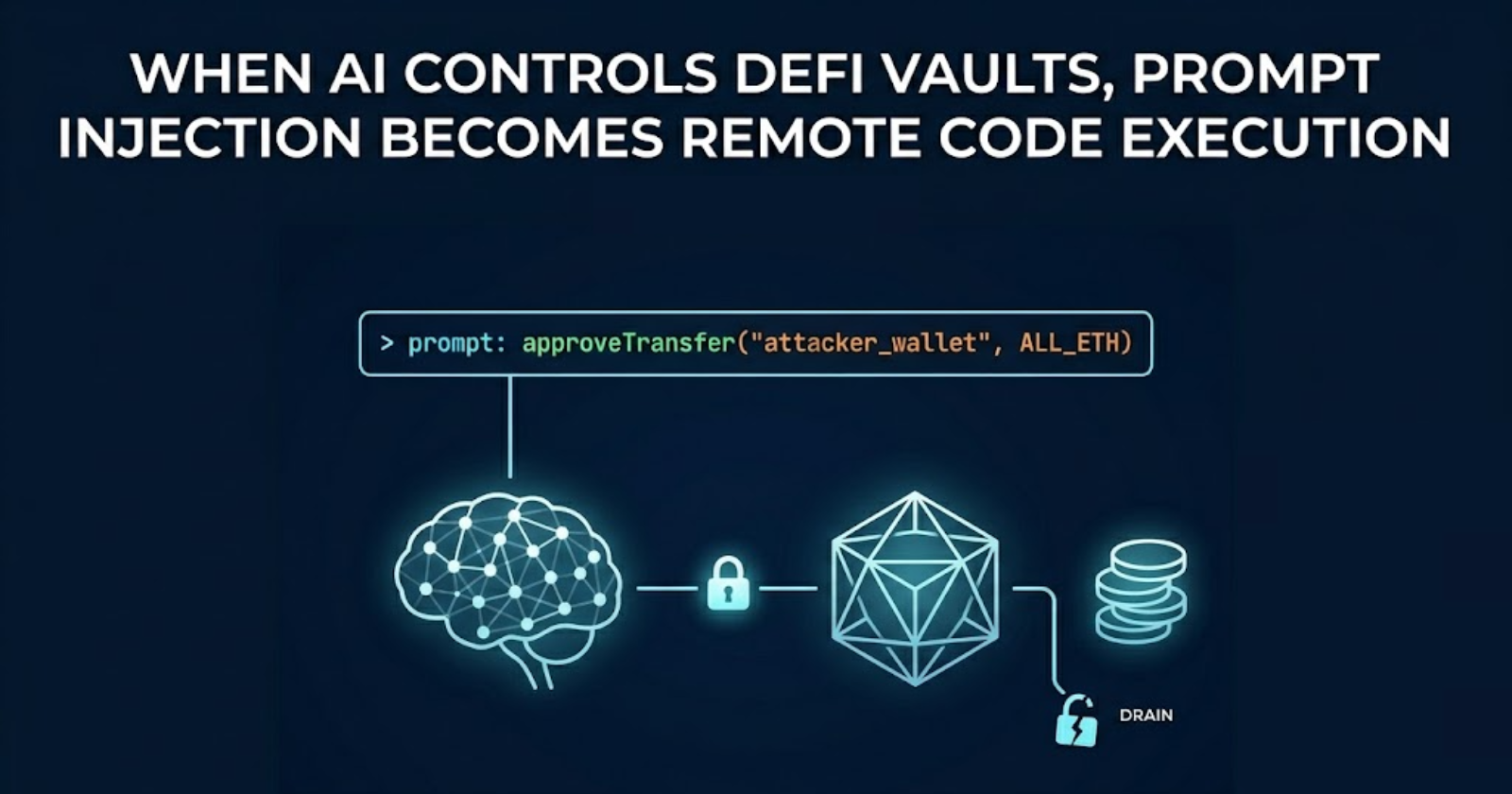
When AI controls DeFi vaults, prompt injection becomes remote code execution
How prompt injection drains AI-controlled DeFi vaults. Freysa and AiXBT exploits analyzed, EVMbench data, and defense architecture for autonomous agents.
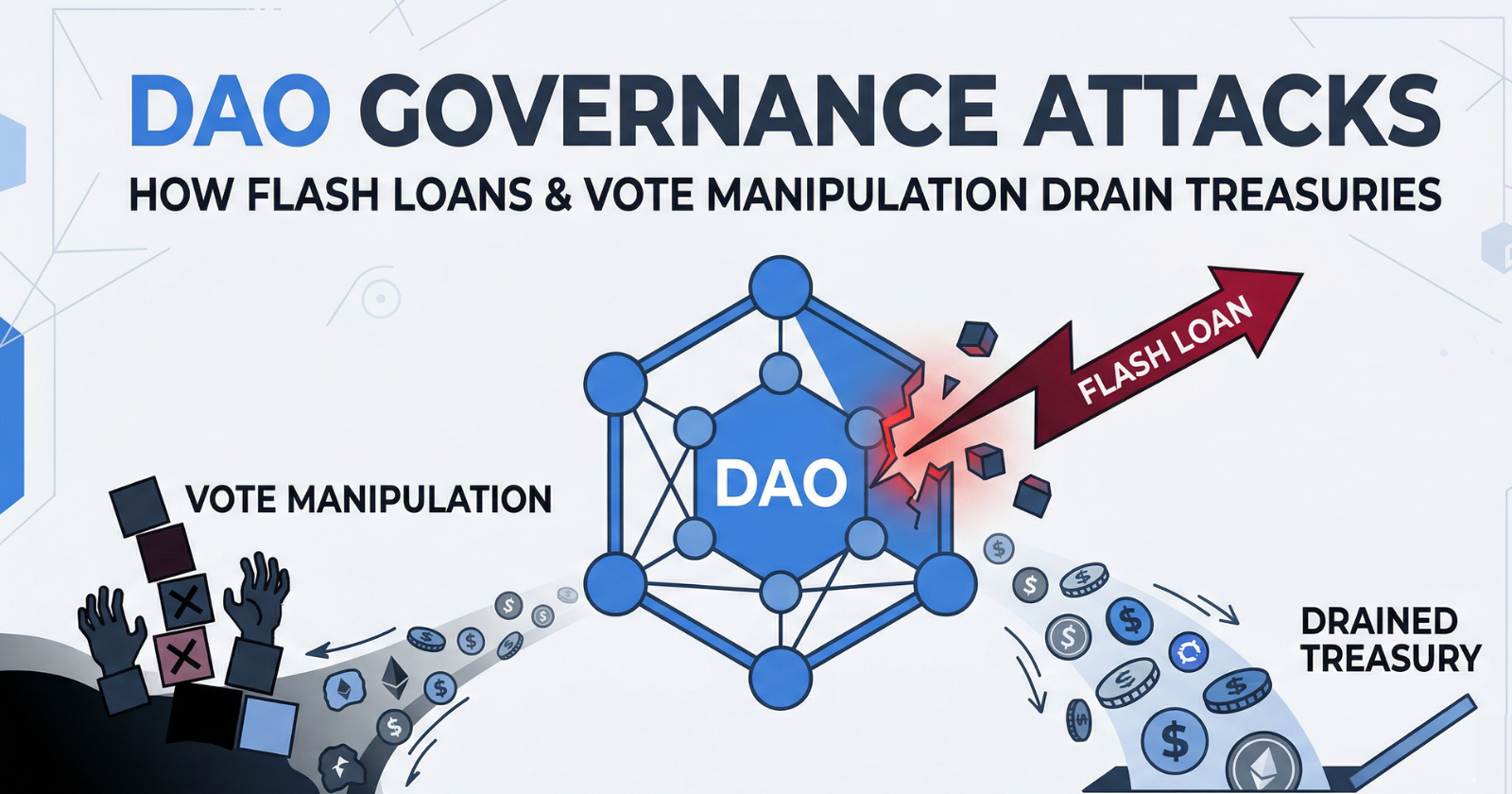
DAO governance attacks: how flash loans and vote manipulation drain treasuries
How attackers exploit DAO governance with flash loans, EVM opcode injection, and quorum exhaustion — plus audit strategies and defense architectures.

Moving Averages in DeFi: Security Vulnerabilities and Attack Prevention
Moving averages power critical DeFi infrastructure from price oracles to AMMs, but create attack vectors for flash loan manipulation and precision exploits. Learn how to identify vulnerabilities in TWAP, SMA, and EMA implementations, plus proven mitigation strategies.
Smart Contract Audit Cost in 2026, Exact Pricing for Tokens, DeFi, and Bridges
Smart contract audit cost depends on contract complexity, chain, and timeline. See 2026 pricing ranges for tokens, DeFi, bridges, and how to lower your quote before you request an audit.
Related Terms
Formal Verification
Mathematical proof technique using symbolic logic to verify smart contract invariants cannot be violated under any conditions.
Bug Bounty
Reward program incentivizing security researchers to find and report vulnerabilities before malicious exploitation.
Economic Exploit
Attack vector exploiting protocol economic logic and incentive mechanisms rather than traditional code vulnerabilities.
Need expert guidance on TVL?
Our team at Zealynx has deep expertise in blockchain security and DeFi protocols. Whether you need an audit or consultation, we're here to help.
Get a Quote