Blind Signing
The practice of approving blockchain transactions based on UI display without verifying the underlying transaction data.
Blind Signing refers to the dangerous practice of approving blockchain transactions by trusting what a user interface displays without independently verifying the actual transaction data that will be executed on-chain. This vulnerability exists at the critical intersection between human operators and blockchain systems, where the data shown to users can differ dramatically from the data sent to the network.
The term gained prominence following the Bybit hack of February 2025, where attackers compromised the front-end interface to display legitimate transaction details while the underlying hex data redirected $1.5 billion to attacker-controlled addresses. Users with hardware wallets and multi-signature wallets still fell victim because they trusted the interface rather than verifying the raw transaction data.
How Blind Signing Attacks Work
Blockchain transactions consist of two distinct layers of information. The presentation layer shows human-readable details like recipient addresses, token amounts, and function names rendered by wallet interfaces or dApp front-ends. The execution layer contains the actual bytecode and calldata that the blockchain will process—typically displayed as hexadecimal strings that most users cannot easily interpret.
Attackers exploit this gap by compromising the presentation layer through various vectors. UI injection attacks modify the JavaScript or HTML served by wallet interfaces, swapping displayed addresses while leaving the underlying transaction data malicious. Supply chain compromises target hosting infrastructure like AWS S3 buckets or CDNs to serve poisoned front-end code. DNS hijacking redirects users to attacker-controlled domains that perfectly mimic legitimate interfaces while capturing transaction signatures.
The fundamental vulnerability is that standard hardware wallets display simplified transaction summaries on their small screens, not complete hex verification. Users approve transactions based on these summaries, assuming the wallet firmware correctly interprets the data. However, if the host computer serves malicious transaction data, even the most secure hardware wallet will faithfully sign the attacker's payload.
Prevention and Mitigation Strategies
Organizations handling significant cryptocurrency value should implement Independent Transaction Verification as standard operating procedure. This requires using multiple, separate tools to decode and verify transaction details before signing. The Cast CLI tool from Foundry provides command-line transaction decoding that operates independently of browser environments. Ledger's Ledger Live desktop application offers another verification layer separate from web interfaces.
For high-value transactions, the verification workflow should include: extracting the raw transaction hex from the signing interface, decoding it with an independent tool on a separate device, manually comparing all parameters (recipient, value, function calls, and calldata), and only proceeding if all three sources show identical information. This air-gapped verification approach eliminates single points of failure in the presentation layer.
Advanced hardware wallets like Ledger with "Clear Signing" support can display human-readable contract interactions directly on the device screen, bypassing potentially compromised host software. However, this feature requires explicit contract integration and verification, limiting its availability to well-known protocols. For novel or custom contracts, users must still verify raw hex data independently.
Technical Implementation for Developers
Protocol developers building front-ends that generate transactions should implement Transaction Intent Verification systems. Before sending transaction data to signing interfaces, display a cryptographic hash of the complete transaction payload and require users to verify this hash through a secondary channel. Smart contracts can be designed to emit events containing expected transaction hashes before execution, allowing external monitoring systems to detect discrepancies.
Organizations should adopt multi-signature wallet policies that require signers to use different verification tools. If three signers must approve a transaction, mandate that each uses a distinct method: one verifies via hardware wallet screen, another via Etherscan's transaction decoder, and a third via command-line tools. This diversity prevents a single compromised tool from affecting all signers.
Development teams should treat their transaction signing flow as a critical security boundary. Regular audits of front-end code, pinned dependencies with integrity checks via Subresource Integrity (SRI) tags, and Content Security Policy (CSP) headers that prevent inline script execution all reduce the attack surface for blind signing exploits. The goal is making UI injection attacks significantly more difficult to execute without detection.
Related Vulnerabilities and Defense in Depth
Blind signing vulnerabilities are closely related to supply chain attacks that target development tooling and hosting infrastructure. The Bybit incident began with a compromised Docker container in their CI/CD pipeline, demonstrating how blind signing exploits often depend on first compromising trusted infrastructure to modify the presentation layer.
Understanding blind signing is essential for anyone managing cryptocurrency custody or developing blockchain interfaces. As the Bybit incident demonstrated, even the most sophisticated security measures—hardware wallets, multi-sig, air-gapped signing—provide no protection if users approve transactions without verifying the actual data being signed. Independent verification must become standard practice for high-value blockchain operations.
Articles Using This Term
Learn more about Blind Signing in these articles:
Blind Signing: The Bybit $1.5B Lesson in UI Insecurity
Technical analysis of the largest crypto hack ($1.5B). How compromised frontend infrastructure enabled UI injection that turned blind signing into a total drain.
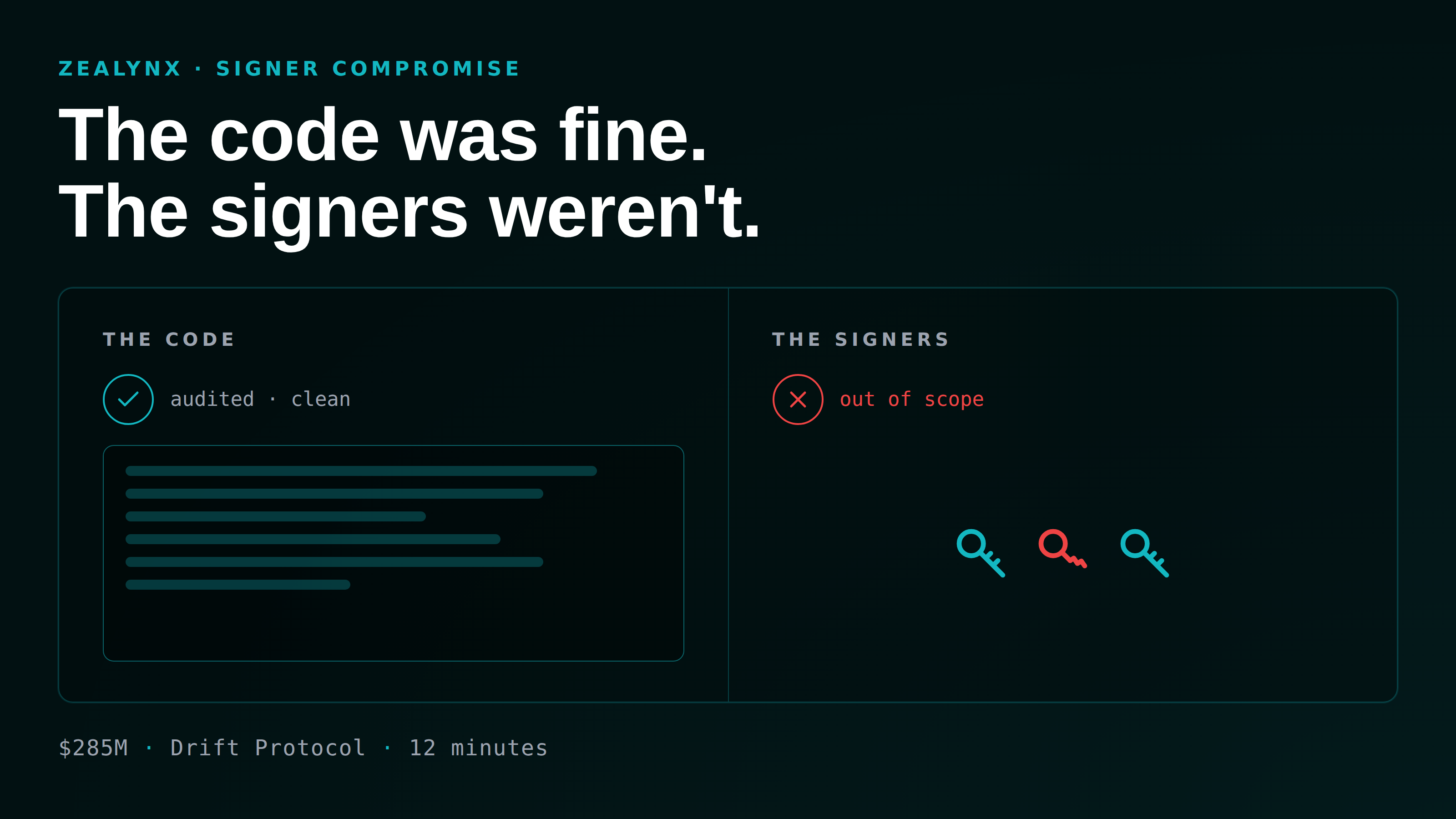
Signer compromise: why clean audits don't stop key hacks
Most 2026 DeFi losses came from compromised signers, not buggy code. How multisig, timelocks, and MPC contain key compromise — lessons from Drift's $285M hack.
2025 DeFi Hacks: $3.4B Exploit Lessons You Must Know
$3.4B lost in 2025: Bybit, Cetus, Balancer breakdowns. Zealynx auditors explain blind signing, supply chain attacks, and how to close audit blind spots.
Related Terms
Hardware Wallet
A physical device that stores cryptocurrency private keys offline, providing enhanced security against remote attacks.
Multi-signature Wallet
A cryptocurrency wallet requiring multiple private key signatures to authorize transactions, distributing trust.
UI Injection
An attack where malicious code is inserted into a user interface to manipulate displayed transaction data while altering execution.
Need expert guidance on Blind Signing?
Our team at Zealynx has deep expertise in blockchain security and DeFi protocols. Whether you need an audit or consultation, we're here to help.
Get a Quote