Flash Accounting
A gas optimization technique that tracks balance deltas during a transaction and only settles the final net amount.
Flash Accounting is a revolutionary gas optimization technique in Uniswap v4 that leverages EIP-1153 transient storage to track balance changes throughout a transaction without executing intermediate token transfers. This approach fundamentally reimagines how automated market makers handle token accounting.
Operational Mechanics
Rather than transferring tokens after each individual operation—the traditional approach that consumes substantial gas—the singleton architecture PoolManager maintains a running tally of "deltas" representing net balance changes. Only at the transaction's conclusion does the system settle the final netted amount, executing a single transfer that accounts for all intermediate operations. This batching dramatically reduces the number of expensive ERC-20 token transfers required for complex multi-step transactions.
Technical Foundation: EIP-1153 Transient Storage
Flash accounting's efficiency derives from EIP-1153 transient storage, a novel Ethereum feature designed specifically for temporary within-transaction data. This storage tier exists only for a transaction's duration, automatically clearing upon completion without requiring explicit cleanup operations. Transient storage operations prove significantly cheaper than persistent storage instructions (SSTORE/SLOAD), as the Ethereum Virtual Machine need not write data to the blockchain's permanent state. This cost differential makes complex operations economically viable that would otherwise remain prohibitively expensive under traditional accounting models.
Transformative Benefits for Protocol Efficiency
Flash accounting delivers multiple compounding advantages for AMM operations. Dramatic gas savings stem from eliminating multiple expensive ERC-20 transfer calls, with complex operations experiencing 50-70% cost reductions. Economic viability for sophisticated strategies emerges as batch operations that were previously too expensive become practical, enabling advanced trading strategies and cross-pool arbitrage.
Atomic transaction guarantees ensure all operations succeed or fail together, eliminating partial execution risks that could leave users or protocols in inconsistent states. Native ETH pair support becomes feasible again—a capability lost in Uniswap v2—as the reduced gas overhead makes ETH wrapping/unwrapping costs negligible compared to potential savings from avoiding WETH altogether.
Practical Example: Multi-Hop Swaps
Consider a multi-hop swap routing through three tokens (A → B → C). Traditional accounting requires transferring tokens A to pool AB (consuming gas), then transferring received B tokens to pool BC (consuming more gas), finally transferring C tokens to the user (additional gas). Each transfer incurs ERC-20 operation costs plus storage updates.
Flash accounting transforms this sequence: the system tracks net deltas showing user owes A tokens and is owed C tokens, with intermediate B tokens canceling out. At transaction end, a single transfer settles the net position. This architectural shift reduces gas consumption by 50-70% for complex operations, making sophisticated routing strategies economically accessible to average users rather than exclusively profitable for MEV searchers.
Security Implications and Delta Management
Flash accounting introduces novel security considerations that developers must carefully address. Precise delta tracking becomes critical, as accounting errors can lead to fund loss or protocol insolvency. Implementation flaws that fail to properly track deltas could allow malicious actors to extract value through inconsistent state. Guaranteed settlement at transaction end must be enforced through multiple validation layers, ensuring no path allows transactions to complete without settling outstanding deltas.
State manipulation vulnerabilities can arise if updates occur in incorrect sequences, potentially enabling reentrancy attacks or other exploitation vectors. Hook developers must deeply understand flash accounting mechanics, as custom hook logic interacting with the delta system can introduce subtle bugs. The complexity of flash accounting demands exhaustive testing and formal verification to ensure correctness under all possible execution paths.
Articles Using This Term
Learn more about Flash Accounting in these articles:
Uniswap v4 hook attacks: 4 exploit patterns with PoCs
The four Uniswap v4 hook attack patterns that cover every public exploit: reentrancy, flag bypass, donation griefing, accounting drift — with minimal PoCs.
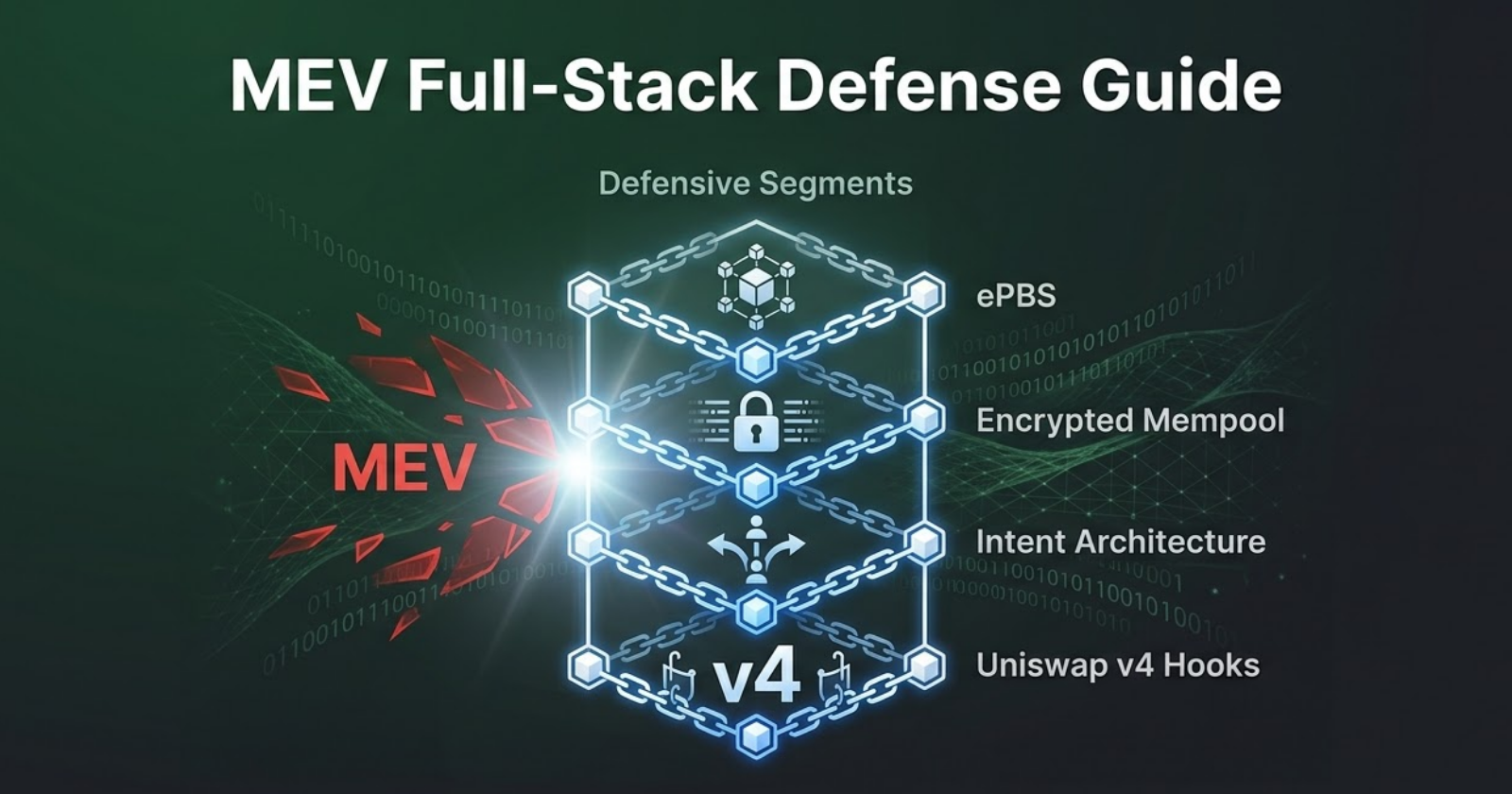
How to protect your DeFi protocol from MEV: A full-stack defense guide
Learn how to defend your DeFi protocol from sandwich attacks and MEV extraction with PBS, encrypted mempools, intent architectures, and Uniswap v4 hooks.
Uniswap v4 Security Guide: Hooks, Risks, and Audit Path
Uniswap v4 security guide for hook risk, singleton architecture, and flash accounting. See what builders should audit before launch.
Related Terms
Singleton Architecture
A design pattern where all pools are managed within a single unified contract, reducing gas costs.
Hooks
External smart contracts in Uniswap v4 that execute custom logic at specific points in a pool's lifecycle.
Automated Market Maker (AMM)
A decentralized exchange protocol that uses mathematical formulas to price assets instead of order books.
Need expert guidance on Flash Accounting?
Our team at Zealynx has deep expertise in blockchain security and DeFi protocols. Whether you need an audit or consultation, we're here to help.
Get a Quote