Timelock
Smart contract mechanism enforcing mandatory delay between initiating and executing critical protocol changes for transparency.
Timelocks are smart contract security mechanisms that enforce mandatory waiting periods between when administrative actions are initiated and when they can be executed, providing transparency and allowing users to exit protocols before potentially malicious or undesirable changes take effect. Rather than instant execution of upgrades, parameter changes, or fund movements, timelocks create windows (typically 24-72 hours) where pending operations are visible on-chain, enabling community oversight and giving users time to evaluate changes before they become irreversible. This mechanism is critical for preventing instant rug pulls and establishing minimum governance standards that institutional investors require.
The concept emerged from Bitcoin's OP_CHECKLOCKTIMEVERIFY and Ethereum's early governance experiments, but gained prominence through DeFi governance models. MakerDAO implemented rigorous timelock requirements for governance changes, Compound's Governor popularized 2-day timelocks for protocol modifications, and OpenZeppelin's TimelockController became the standard implementation. The mechanism transitioned from optional governance nicety to investor-required infrastructure after numerous instant-upgrade exploits demonstrated risks of unconstrained admin control.
Timelock Architecture and Implementation
Delay periods balance user protection against operational agility. The article mentions "24–48 hours" as standard timelock durations for preventing "instant malicious logic changes." Shorter delays (12-24 hours) enable faster incident response but reduce user exit time. Longer delays (72+ hours) maximize user protection but slow emergency patches. Most protocols use 48 hours as the equilibrium—sufficient time for community evaluation without excessive operational friction.
Role-based access determines who can initiate timelock operations. The most secure model requires multi-signature wallets (3-of-5 or higher) to propose changes, timelock enforcement of waiting periods before execution, and separate executor roles (sometimes any address) allowed to finalize changes after delays complete. This separation prevents single-party instant execution while maintaining deterministic operations—if a proposal passes timelock, anyone can execute it rather than requiring proposer availability.
Grace periods define time windows after delays complete when operations remain executable before expiring. If a 48-hour timelock completes but executors don't trigger the operation within the 14-day grace period, the proposal expires and must be re-submitted. Grace periods prevent indefinitely pending operations accumulating in queues while providing reasonable execution windows accounting for executor coordination challenges.
Operation queuing enables batching multiple changes into atomic executions. Rather than separate timelocks for each parameter change, protocols can queue related changes together, executing them atomically after the longest required delay passes. This ensures dependent changes (e.g., increasing borrow limits while adjusting risk parameters) don't create temporary security windows where partial changes created unsafe states.
Security Properties and Threat Models
Rug pull prevention represents timelocks' most critical security property. The article identifies "single EOA control" as enabling "rug pull vectors"—with timelock requirements, even compromised admin keys can't instantly drain protocols. Attackers must submit malicious proposals visible to everyone, waiting the full delay period while users withdraw funds and the community coordinates response. This visibility transforms instant attacks into high-friction, high-visibility operations with significant failure risk for attackers.
Governance transparency emerges from on-chain visibility of pending operations. Anyone can monitor timelock contracts to see upcoming changes: parameter adjustments, contract upgrades, fund movements, or role modifications. This transparency enables informed user decisions—continuing to use the protocol, withdrawing funds before changes execute, or initiating counter-proposals through governance. The article emphasizes "transparency is the only currency that matters in Web3 due diligence," with timelocks providing mechanism for this transparency.
Upgrade attack mitigation prevents malicious proxy pattern implementations from instantly activating. Without timelocks, compromised upgrade keys can immediately deploy malicious contract logic, drain user funds within blocks, and disappear. Timelocks force upgrade visibility—the new implementation address appears in the timelock queue, allowing technical analysis before execution. Community members can examine the code, identify vulnerabilities or malicious logic, and warn users before upgrades activate.
Parameter manipulation protection prevents instant economic attacks through governance-controlled variables. Many protocols have adjustable parameters: collateral ratios, fee structures, oracle data sources, or pool weights. Instant manipulation of these parameters can trigger liquidations, extract fees, or enable arbitrage attacks. Timelocks ensure parameter changes are gradual and visible, preventing sudden economic attacks that depend on surprise.
Integration with Governance and MultiSig
MultiSig plus timelock represents the institutional standard for protocol governance. The article states investors require multi-sigs "combined with a Timelock" to prevent instant malicious upgrades. The typical architecture: multisig wallet serves as timelock admin (proposing changes), timelock contract enforces delays, and separate execution addresses (or anyone) can finalize changes after delays pass. This layered approach requires both coordinated multisig compromise AND waiting the delay period for attacks to succeed.
Emergency functions create tension with timelock security. Protocols need rapid response capabilities for critical vulnerabilities or ongoing attacks. Some implementations include "guardian" roles that can pause contracts instantly without timelock delays, or reduced timelock periods for specifically designated emergency functions. However, these exceptions create attack surfaces—compromised guardian keys enable protocol disruption through malicious pauses, requiring careful role design balancing emergency response with abuse prevention.
Governance token voting often determines which operations enter timelock queues. Protocols using decentralized governance (e.g., Compound, Uniswap, Aave) require token holder votes to pass proposals before timelocks begin. This adds democratic legitimacy—changes entering timelock queues represent community will rather than arbitrary admin actions. However, it also enables governance attacks where adversaries accumulate tokens, pass malicious proposals, then execute them after timelock delays.
Social consensus override provides theoretical escape valves. Even if malicious proposals pass token votes and survive timelock periods, community social consensus might reject them. Coordination tools like Snapshot, Discord, and governance forums enable rapid community mobilization against malicious proposals. Some protocols include "veto" mechanisms where security councils or large token holders can cancel malicious timelock operations, though this reintroduces centralization concerns.
Investor Evaluation and TechDD
Timelock requirement verification appears prominently in technical due diligence. The article emphasizes that "if the contracts are proxies, there must be a Timelock (24–48 hours)" as a non-negotiable investor requirement. Investors specifically verify timelock parameters: delay durations meet minimum thresholds, role assignments prevent single-party control, grace periods are reasonable, and emergency functions don't completely bypass delays.
Acknowledged risk assessment connects to timelocks through governance attack vectors. The article notes that unfixed "Acknowledged" critical findings are deal-breakers "unless there is a massive governance constraint (like a Timelock) in place." This reflects investor recognition that some vulnerabilities are unfixable due to architectural constraints but can be mitigated through governance safeguards. A protocol with acknowledged centralization risks might still be investable if robust multi-sig plus timelock controls prevent single-party exploitation.
Upgrade history transparency during due diligence includes examining past timelock operations. Investors review what changes were proposed, how community responded, whether malicious proposals were detected and prevented, and whether emergency overrides were ever used inappropriately. This operational history reveals whether timelock mechanisms function as intended or merely provide security theater while teams maintain backdoor control.
Parameter evolution analysis examines whether protocol teams respect timelock constraints in practice. Some teams submit perfectly reasonable governance proposals through timelock for optics while maintaining hidden admin keys that bypass these controls. Investors verify through on-chain analysis that all parameter changes, upgrades, and role modifications actually went through timelock processes rather than direct admin execution.
Common Vulnerabilities and Attack Patterns
Timelock bypass functions sometimes exist accidentally or deliberately. Developers might include "admin override" functions for development convenience, forgetting to remove them before mainnet deployment. These functions enable instant parameter changes or upgrades bypassing timelock controls entirely. The article's warning about "centralization in disguise" where "a single EOA has the power" despite claims of governance reflects these hidden bypass mechanisms.
Short-circuiting through role confusion occurs when multiple admin roles exist with unclear relationships. A contract might have a timelock controlling owner operations but a separate "admin" role without timelock constraints controlling critical functions. Attackers or malicious insiders exploit these role confusions to bypass intended timelock protections. Proper architecture uses single admin role (the timelock contract) with all privileged operations requiring timelock approval.
Dependency timelock mismatch creates vulnerabilities when protocols depend on other protocols with different timelock requirements. If Protocol A uses 48-hour timelocks but depends on Protocol B with no timelock, attackers can compromise Protocol B's instant upgrades to attack Protocol A. Due diligence must examine not just direct timelock implementations but timelock requirements of all critical dependencies.
Front-running timelock operations enables certain attacks. If a timelock queues a profitable parameter change (e.g., increased lending rates), actors can front-run by depositing large amounts right before execution, capturing profits intended to gradually attract liquidity. While not exploits per se, these front-running opportunities represent economic inefficiencies enabled by timelock visibility. Some protocols implement gradual parameter adjustments (ramping values over hours/days) rather than instant changes post-timelock to mitigate this.
Best Practices and Implementation Patterns
OpenZeppelin TimelockController provides production-ready, audited implementations. Rather than custom timelock code (bug-prone and unaudited), protocols should use battle-tested libraries. OpenZeppelin's implementation includes proposer roles, executor roles, delay configuration, operation batching, and grace periods—all the features needed for secure governance. The library's widespread adoption means tooling and security infrastructure support it well.
Upgrade-specific timelock extensions enable different delays for different operation types. Critical operations like ownership transfers might require 72-hour delays while minor parameter adjustments use 24-hour delays. This tiered approach balances security with operational efficiency—high-risk operations get maximum scrutiny while low-risk operations maintain agility.
Monitoring and alerting infrastructure should track timelock queues. Protocols should implement monitoring that alerts security teams and community members when new operations enter timelock queues. Public announcement channels (Twitter, Discord, governance forums) should broadcast pending changes, ensuring maximum visibility. Some protocols operate "timelock guardian" services that automatically analyze pending operations for suspicious patterns, flagging potentially malicious proposals.
Testing timelock interactions requires careful scenario planning. Tests should verify that all critical functions respect timelock constraints, emergency overrides work as intended without enabling abuse, role transitions follow proper authorization, and edge cases like expired operations or conflicting proposals handle gracefully. The complexity of timelock interactions makes comprehensive testing essential—many vulnerabilities emerge from unexpected interaction patterns during upgrades or emergency responses.
Real-World Examples and Lessons
Compound's successful timelock model demonstrated that governance delays don't prevent protocol evolution. Despite 2-day timelocks on all governance changes, Compound successfully implemented numerous protocol upgrades, parameter adjustments, and new market launches. The timelock provided transparency without preventing innovation, establishing the pattern most DeFi protocols now follow.
SushiSwap 0xMaki incident illustrated timelock importance. Early SushiSwap lacked proper timelock controls, enabling anonymous founder 0xMaki to have instant control over migrated liquidity. While 0xMaki ultimately acted honorably, the incident demonstrated that community trust alone can't replace cryptographic enforcement. SushiSwap subsequently implemented multi-sig plus timelock controls, learning the lesson other protocols inherited.
Bancor v2 migration controversy showed timelock limitations when paired with effective governance coercion. Even with timelocks, if protocols face existential threats requiring urgent changes (e.g., systemic losses from impermanent loss), communities may feel compelled to approve proposals without adequate evaluation. Timelocks provide time for evaluation but don't guarantee quality evaluation occurs—social coordination and governance education remain essential complements.
Understanding timelocks is critical for evaluating protocol security and investor due diligence readiness. The article's emphasis that protocols without timelocks on upgradeable contracts represent deal-breakers reflects how timelocks transitioned from optional governance nicety to mandatory security infrastructure. For investors, timelock presence signals protocol maturity, risk awareness, and commitment to user protection over team convenience. Combined with multi-sig controls, timelocks create the minimum viable governance structure enabling institutional investment in otherwise centralized protocols.
Articles Using This Term
Learn more about Timelock in these articles:

GENIUS Act Stablecoin Security: 5 Things Your Contract Must Get Right
The GENIUS Act asks every US dollar stablecoin for 1:1 reserves and the ability to comply with lawful orders. Five ways a stablecoin contract fails those demands, each shown on a local chain, with the fix in Solidity.

x402 Security: 5 Ways a Paid API Gets Drained (and the Fix for Each)
One signed x402 payment, sent 20 times at once, bought 20 premium responses. The five ways a paid x402 endpoint gets drained, each shown on a local chain, with the fix in code.
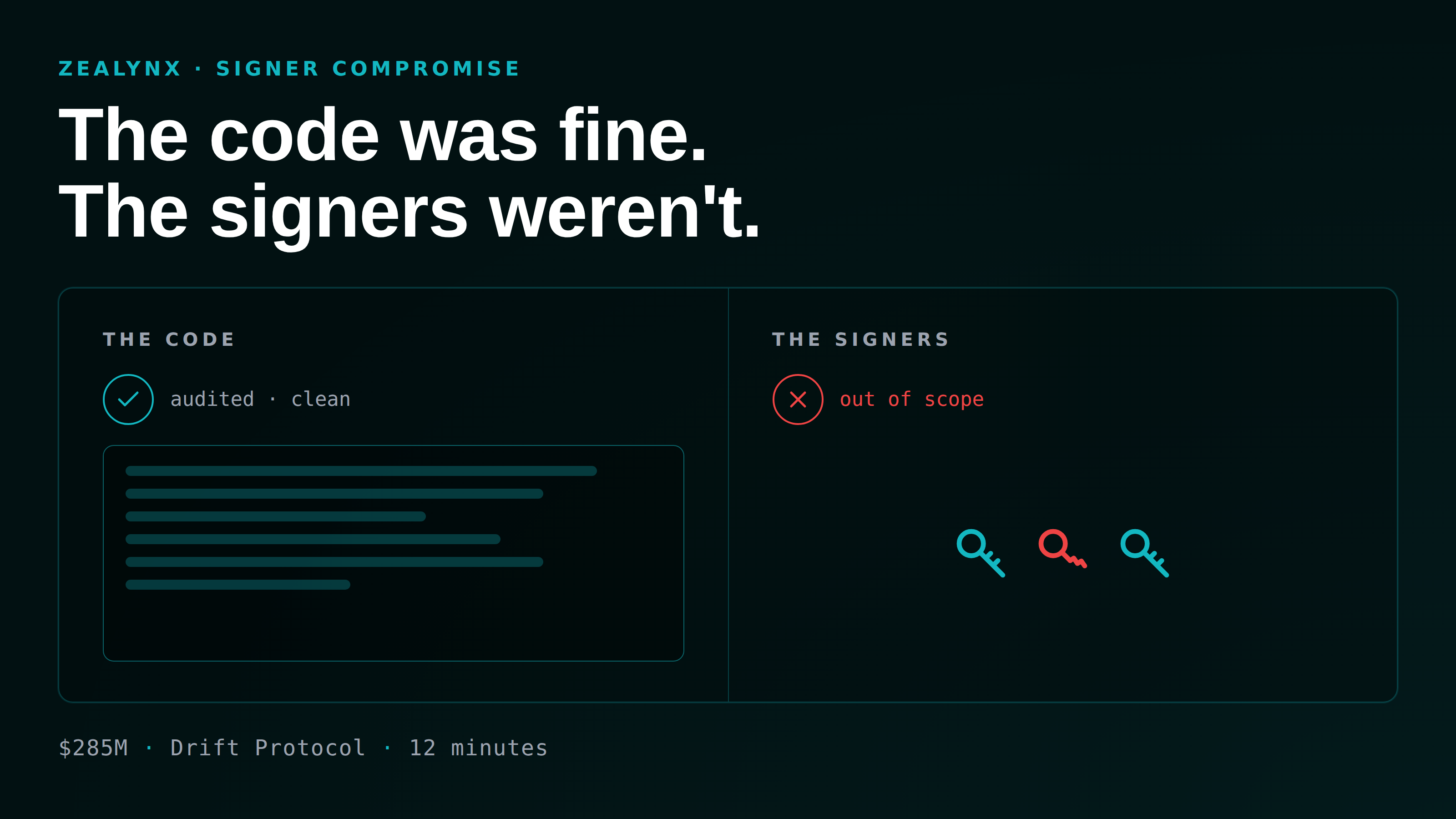
Signer compromise: why clean audits don't stop key hacks
Most 2026 DeFi losses came from compromised signers, not buggy code. How multisig, timelocks, and MPC contain key compromise — lessons from Drift's $285M hack.
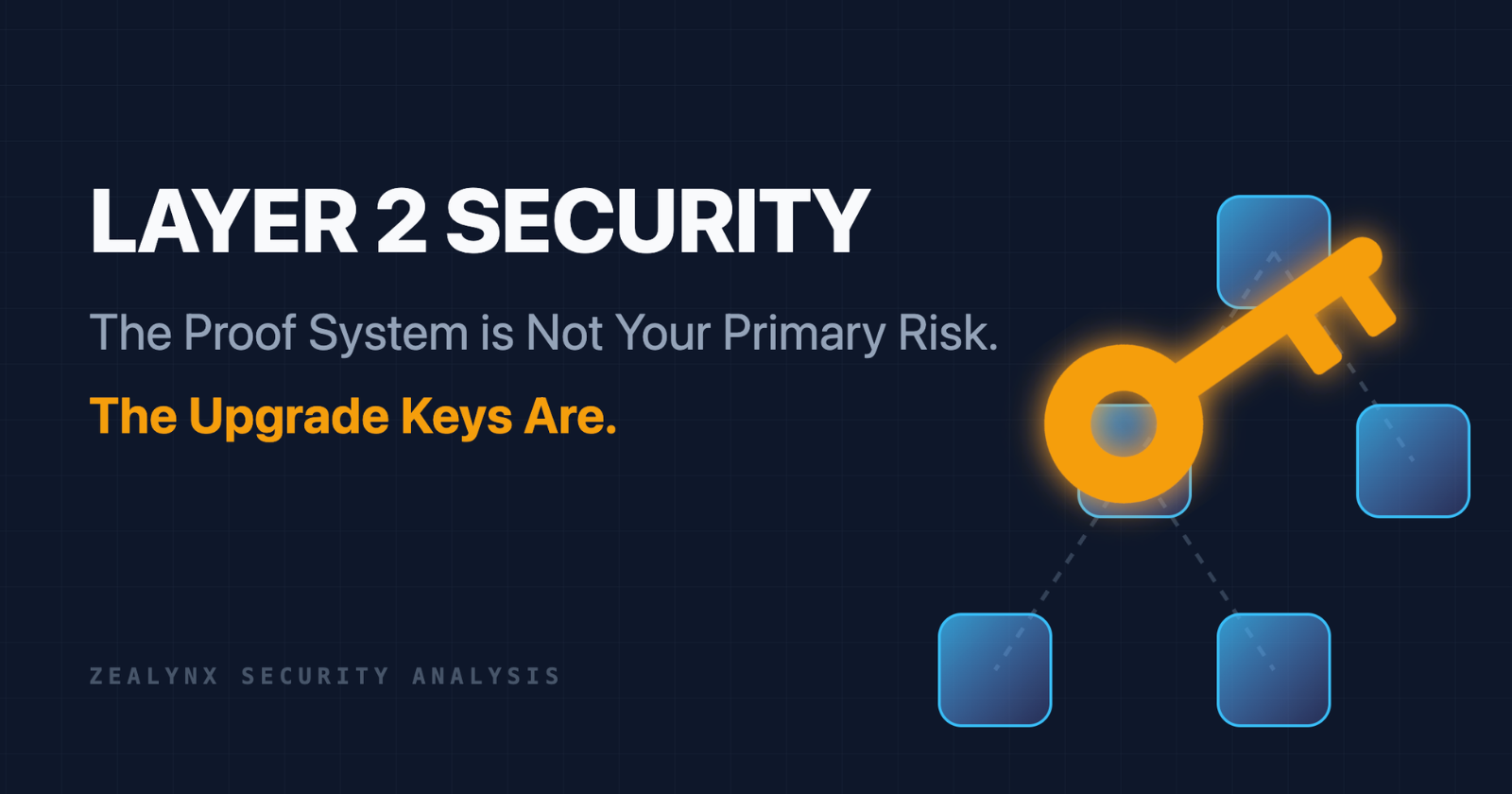
Layer 2 security under the hood: proof systems, upgrade keys, and what actually protects your funds
Compare Arbitrum, Optimism, and Polygon zkEVM security models. Fraud proofs, ZK validity proofs, upgrade multisigs, and sequencer risks — a data-driven L2 guide.
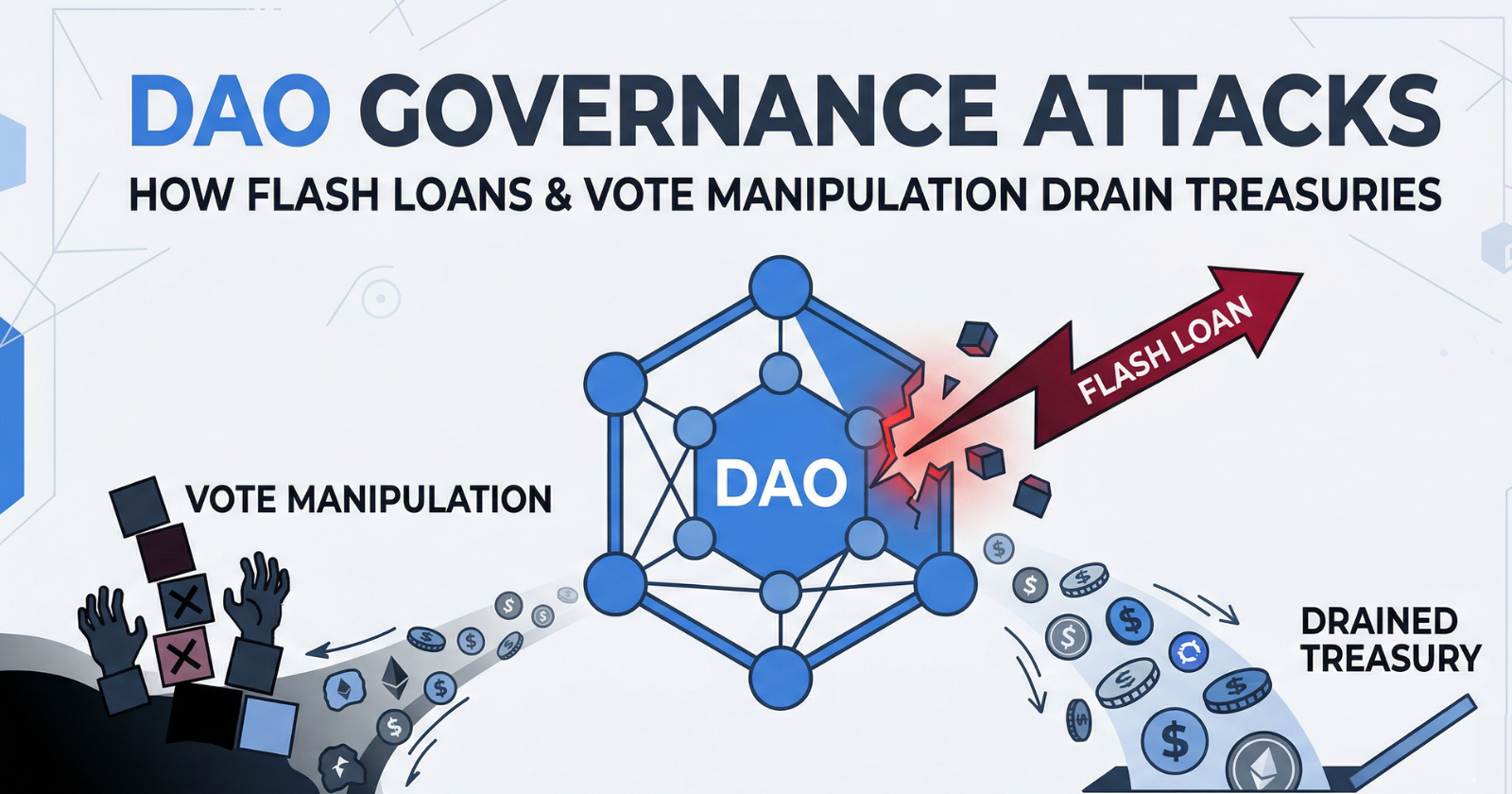
DAO governance attacks: how flash loans and vote manipulation drain treasuries
How attackers exploit DAO governance with flash loans, EVM opcode injection, and quorum exhaustion — plus audit strategies and defense architectures.
Smart Contract Audit ROI: Investor Due Diligence Guide
Discover how smart contract audits impact valuation during technical due diligence. Learn what investors look for in audit reports, which security firms matter, and red flags that kill funding rounds for Web3 startups.
Related Terms
Multi-signature Wallet
A cryptocurrency wallet requiring multiple private key signatures to authorize transactions, distributing trust.
Technical Due Diligence
Investor evaluation process examining smart contract code quality, security posture, and engineering practices before funding.
Defense in Depth
Layered security strategy combining multiple independent protections rather than relying on single security measures.
Need expert guidance on Timelock?
Our team at Zealynx has deep expertise in blockchain security and DeFi protocols. Whether you need an audit or consultation, we're here to help.
Get a Quote