MEV (Maximal Extractable Value)
Profit extracted by reordering, including, or excluding transactions within a block.
MEV (Maximal Extractable Value) refers to profit that can be extracted by reordering, including, or excluding transactions within a block. Originally termed "Miner Extractable Value," the concept expanded beyond miners to encompass all block producers including validators, builders, and searchers in modern blockchain architectures.
Primary MEV Extraction Strategies
Sandwich Attacks as Dominant Vector
Sandwich attacks represent the most prevalent MEV extraction method on decentralized exchanges. Sophisticated bots continuously monitor pending transactions in the mempool, identifying profitable trading opportunities. Upon detecting a large trade, the bot executes a front-running buy order immediately before the victim's transaction, pushing prices higher. The victim's trade then executes at this artificially elevated price, experiencing worse execution than anticipated. Finally, the bot places a sell order immediately after (back-running), profiting from the price impact created by the victim's trade. This three-transaction sequence extracts value directly from traders through systematic exploitation of transparent mempools.
Arbitrage as "Beneficial" MEV
Arbitrage opportunities arise from temporary price discrepancies between different decentralized exchanges or between DEXs and centralized venues. Bots capture these inefficiencies by executing simultaneous trades across platforms, buying assets where prices are low and selling where prices are high. While extracting MEV, arbitrage is generally considered "good MEV" or "beneficial MEV" because it serves the valuable function of harmonizing prices across markets, improving overall price discovery and market efficiency.
Competitive Liquidation Markets
Liquidation opportunities emerge when leveraged positions become undercollateralized, requiring forced closure to protect protocol solvency. Sophisticated actors monitor these positions in real-time, competing to be first to execute liquidations and capture liquidation bonuses offered as incentives. This competitive dynamic creates a winner-take-all market where milliseconds determine profitability, driving significant infrastructure investment in low-latency systems and preferential block builder relationships.
User Impact and Market Externalities
MEV extraction imposes significant costs on regular users participating in decentralized finance. Degraded execution quality means trades consistently execute at prices worse than expected, with slippage exceeding what market conditions alone would dictate. Transaction failures occur when front-running bots preempt user trades, causing reverts that still consume gas fees without achieving desired outcomes. Users bear elevated transaction costs from both successful MEV attacks and failed attempts, creating an invisible tax on DeFi participation that disproportionately affects smaller traders lacking sophisticated protection mechanisms.
Emerging Protection Mechanisms
Protocol designers have developed various mechanisms to mitigate MEV extraction. Private relay services like Flashbots route transactions through private mempools, hiding them from public mempool monitoring until block inclusion. Time-Weighted Average Market Makers (TWAMM) spread large orders across multiple blocks, reducing per-block price impact and MEV extraction surface.
MEV-Share protocols represent a novel approach that acknowledges MEV inevitability while redistributing extracted value back to users whose transactions generate MEV opportunities. Commit-reveal schemes require users to submit encrypted transaction details in a commitment phase, then reveal parameters only after a delay, preventing MEV bots from observing trade details before execution. These protections demonstrate the arms race between MEV extractors and protocol defenders.
Economic Scale and Market Structure
MEV extraction has evolved into a substantial industry, with cumulative extraction exceeding $600 million since Ethereum's inception according to MEV-Explore data. Sophisticated bot networks operate 24/7, competing for profitable opportunities through advanced infrastructure including dedicated block builders, private transaction pools, and preferential validator relationships. This professionalization of MEV extraction has created significant barriers to entry, concentrating profits among well-capitalized, technically sophisticated operators while imposing costs broadly across all DeFi participants.
Protocol Design Considerations
Protocol architects must integrate MEV awareness into fundamental design decisions to protect users effectively. Slippage protection mechanisms remain critical first-line defenses, allowing users to specify maximum acceptable execution degradation. Private order flow infrastructure can substantially reduce MEV exposure by removing transactions from public visibility until settlement.
Fair ordering mechanisms attempt to distribute MEV more equitably rather than allowing capture by the fastest bot. Some protocols explore first-come-first-served ordering, encrypted mempools, or randomized transaction sequencing to reduce advantages from low-latency infrastructure. These considerations demonstrate that MEV represents not merely an implementation detail but a fundamental challenge requiring architectural responses.
Articles Using This Term
Learn more about MEV (Maximal Extractable Value) in these articles:

Oracle manipulation in DeFi: how price feeds become attack vectors
How attackers exploit oracle price feeds in DeFi using flash loans, AMM imbalances, and governance subversion — with defense patterns for protocol architects.
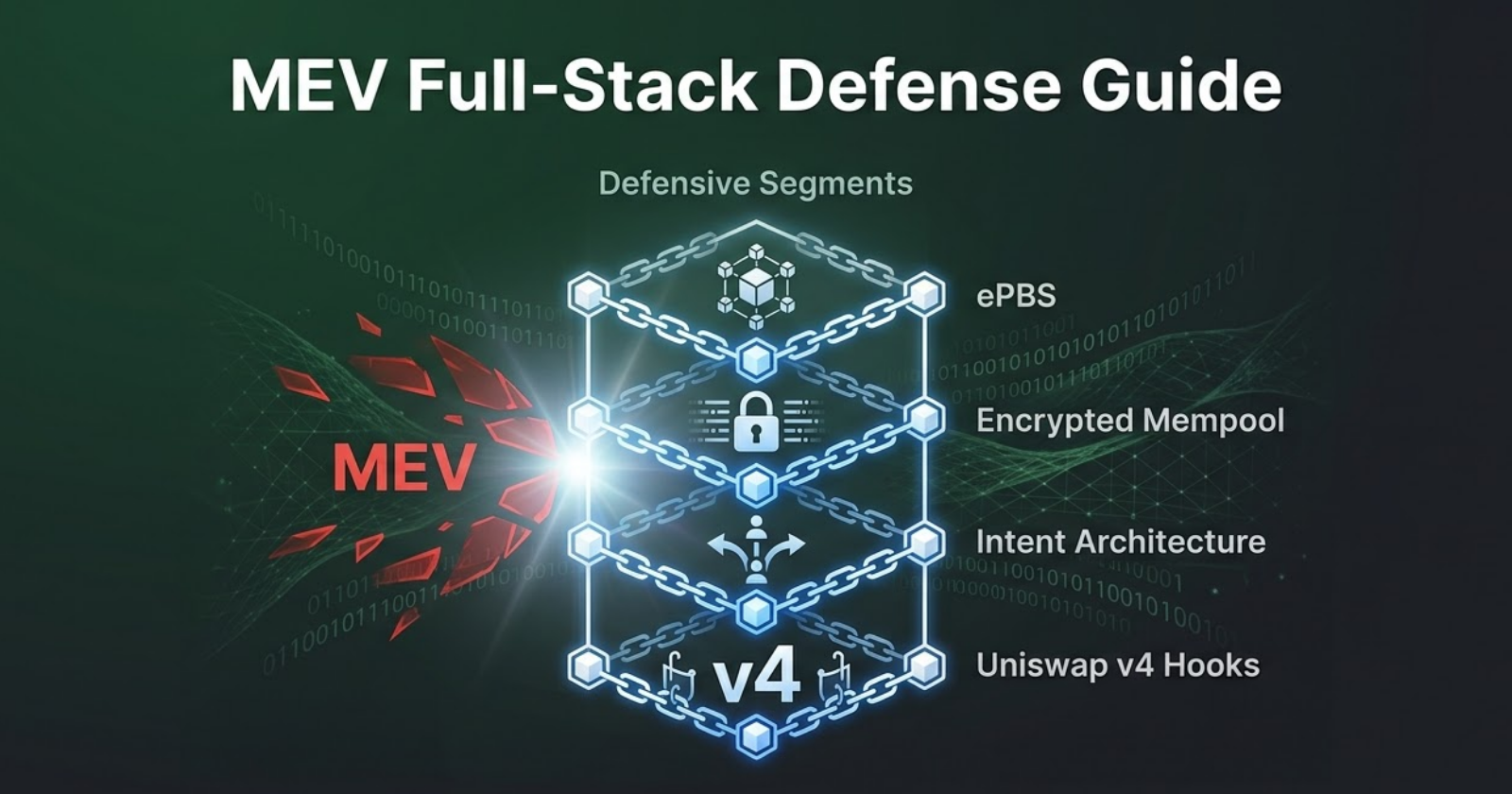
How to protect your DeFi protocol from MEV: A full-stack defense guide
Learn how to defend your DeFi protocol from sandwich attacks and MEV extraction with PBS, encrypted mempools, intent architectures, and Uniswap v4 hooks.
![EthCC[9] in Cannes: Which Security Tracks Actually Matter for Protocol Teams](/post/ethcc-security-guide/cover.png)
EthCC[9] in Cannes: Which Security Tracks Actually Matter for Protocol Teams
A developer-focused guide to EthCC[9] in Cannes — which security tracks, ZK sessions, and side events matter most for protocol teams shipping on EVM and Solana.
Uniswap v4 Security Guide: Hooks, Risks, and Audit Path
Uniswap v4 security guide for hook risk, singleton architecture, and flash accounting. See what builders should audit before launch.
Related Terms
Automated Market Maker (AMM)
A decentralized exchange protocol that uses mathematical formulas to price assets instead of order books.
Hooks
External smart contracts in Uniswap v4 that execute custom logic at specific points in a pool's lifecycle.
Flash Accounting
A gas optimization technique that tracks balance deltas during a transaction and only settles the final net amount.
Need expert guidance on MEV (Maximal Extractable Value)?
Our team at Zealynx has deep expertise in blockchain security and DeFi protocols. Whether you need an audit or consultation, we're here to help.
Get a Quote