Quorum
The minimum percentage of total voting power that must participate in a governance vote for the result to be considered valid.
Quorum is the minimum threshold of voting participation required for a DAO governance proposal to be considered valid. Without quorum requirements, a single token holder could pass proposals while the rest of the community is disengaged, making quorum a fundamental safeguard against minority capture.
How quorum works
In most governance implementations, quorum is defined as a percentage of total voting power. A 4% quorum on a protocol with 100 million governance tokens means at least 4 million tokens worth of votes must be cast for any proposal to pass. OpenZeppelin's GovernorVotesQuorumFraction implements this as a configurable parameter.
Quorum applies to participation, not approval. A proposal can meet quorum with 4 million votes cast but still fail if the majority voted against it. Both thresholds — quorum and approval percentage — must be met for execution.
Security implications
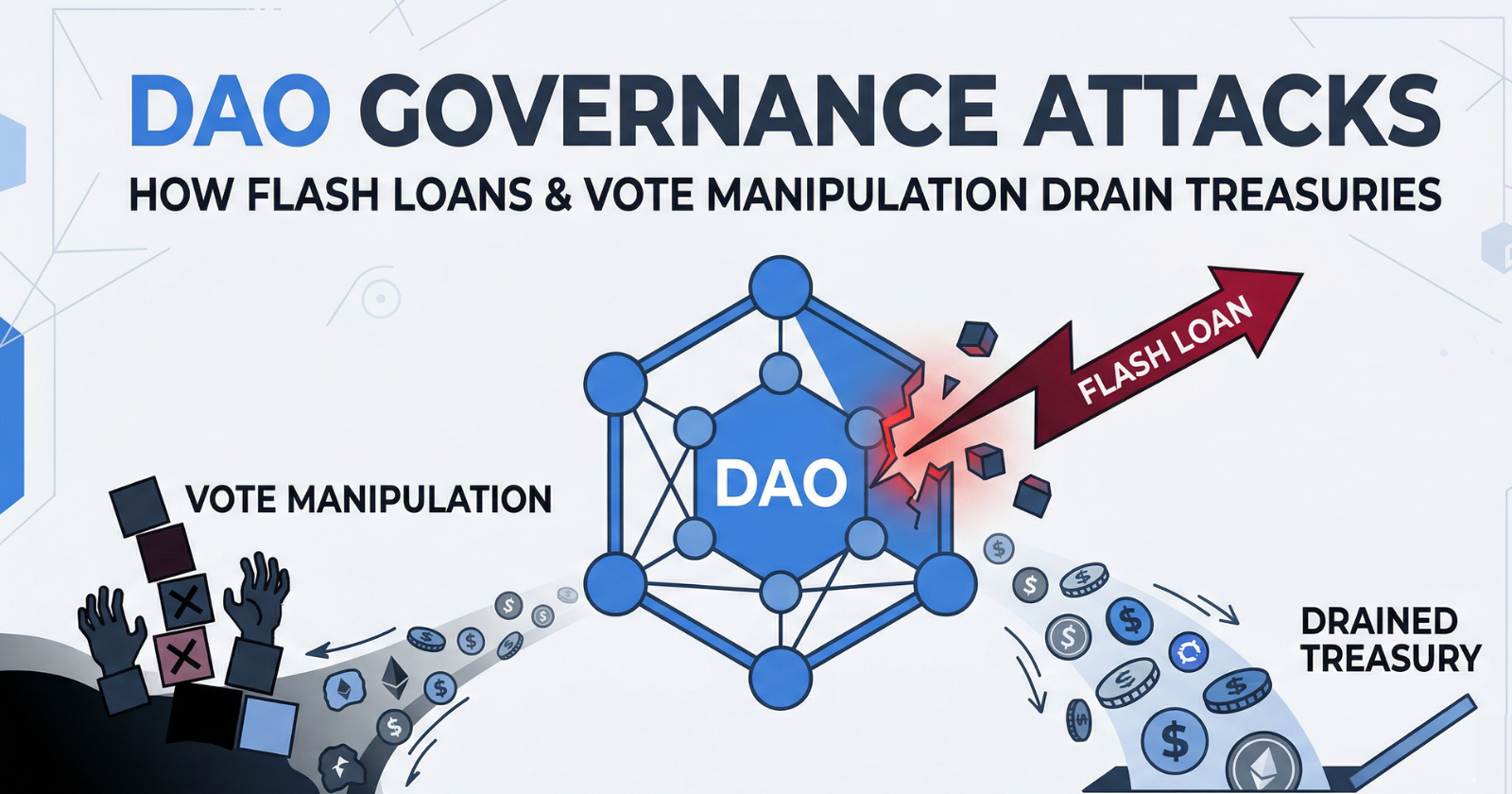
Too-low quorum enables governance attacks where a single well-funded entity passes proposals during periods of low engagement (weekends, holidays, market crashes). The Compound Finance "tunneling" incident (2024) demonstrated how an entity could accumulate enough COMP to meet quorum and divert $24 million from the treasury.
Too-high quorum creates governance deadlock where legitimate proposals cannot pass even with broad support, because token holders are apathetic or their tokens are locked in DeFi positions and cannot be used for voting.
Quorum relative to circulating vs. total supply is a critical design decision. If quorum is set against circulating supply, burned or permanently locked tokens reduce the effective threshold over time. Setting quorum against total supply provides a stable baseline but may be unreachable if significant portions are locked.
Best practices
Security-conscious quorum design uses tiered thresholds: higher quorum (10-15%) for treasury movements and contract upgrades, lower quorum (4-5%) for routine parameter adjustments. Dynamic quorum models adjust thresholds based on historical participation rates. Combined with timelocks and N-1 block checkpointing, proper quorum design is essential for governance attack prevention.
Articles Using This Term
Learn more about Quorum in these articles:
Related Terms
DAO (Decentralized Autonomous Organization)
A blockchain-based organization governed by smart contracts and token-weighted voting rather than centralized management.
Governance Attack
An exploit that weaponizes a protocol's legitimate voting mechanics to pass malicious proposals or drain treasury funds.
Timelock
Smart contract mechanism enforcing mandatory delay between initiating and executing critical protocol changes for transparency.
Quadratic Voting
A voting mechanism where the cost of additional votes scales geometrically, reducing plutocratic dominance but vulnerable to Sybil attacks.
Need expert guidance on Quorum?
Our team at Zealynx has deep expertise in blockchain security and DeFi protocols. Whether you need an audit or consultation, we're here to help.
Get a Quote