Rage Quit
A governance escape mechanism allowing minority stakeholders to withdraw their proportional share of assets before a hostile proposal executes.
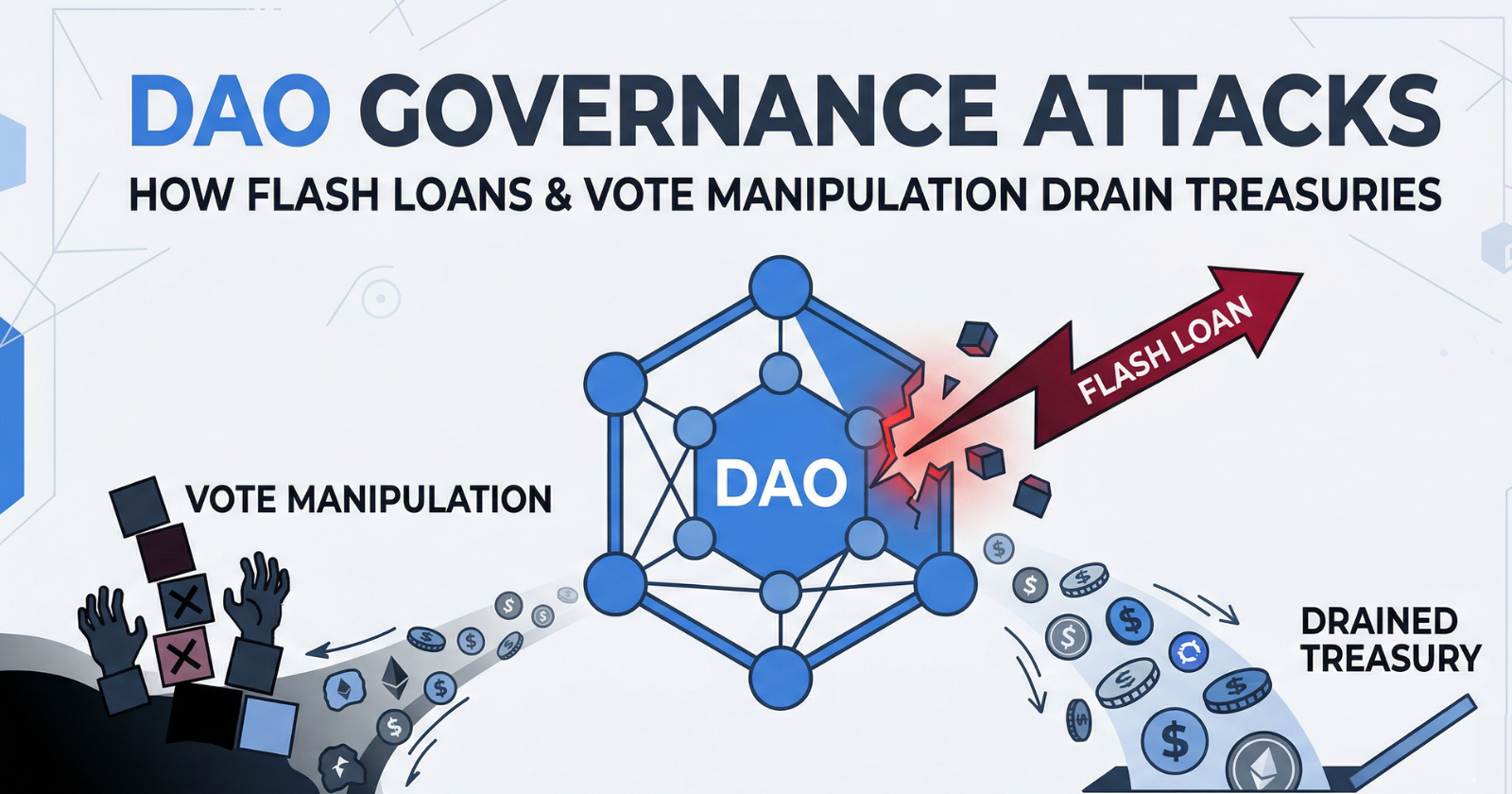
Rage quit is a governance protection mechanism that allows dissenting minority stakeholders to exit a DAO and withdraw their proportional share of treasury assets before a proposal they oppose is executed. The mechanism provides a cryptographic guarantee that even if governance is captured — through token accumulation, flash loan attacks, or vote buying — minority participants retain an inviolable right to exit with their capital intact.
The concept was pioneered by MolochDAO (2019), where members could "rage quit" by burning their shares and receiving a proportional claim on the DAO's treasury assets. This design constraint forces proposers to consider the economic impact of contentious proposals: if a proposal is sufficiently hostile, enough members will rage quit to drain the treasury before the proposal can extract value.
How rage quit works
In its simplest form, rage quit operates as a burn-and-redeem mechanism. A DAO member burns their governance shares and receives their proportional allocation of all treasury assets. If a member holds 5% of shares and the treasury contains $10 million, they receive $500,000 upon rage quitting.
The mechanism creates a natural check on governance power: the more hostile a proposal, the more members exit, reducing the remaining treasury available to the attacker. This game-theoretic constraint makes governance attacks economically self-defeating — by the time the attacker gains enough votes to pass their proposal, the rational opposing members have already withdrawn the assets the attacker sought to capture.
Lido's dual governance implementation
Lido's Optimistic Dual Governance extends rage quit into a multi-threshold system. When LDO token holders pass a proposal, stETH holders can signal opposition by depositing into an Escrow contract. At 1% of total stETH supply, the proposal is delayed 5-45 days. At 10%, a permanent "Rage Quit" state is triggered — the protocol freezes, and stETH holders can withdraw their underlying ETH through a guaranteed exit route.
This architecture solves the principal-agent problem where governance token holders (LDO) control assets belonging to a different stakeholder group (stETH holders), ensuring the at-risk group retains exit guarantees regardless of how governance tokens are distributed.
Security properties
Rage quit transforms governance from a winner-takes-all system into one with guaranteed minority protection. Combined with timelocks and quorum requirements, it creates layered defense against governance attacks. The key invariant: no governance action can irreversibly harm minority stakeholders faster than those stakeholders can exit.
Articles Using This Term
Learn more about Rage Quit in these articles:
Related Terms
DAO (Decentralized Autonomous Organization)
A blockchain-based organization governed by smart contracts and token-weighted voting rather than centralized management.
Governance Attack
An exploit that weaponizes a protocol's legitimate voting mechanics to pass malicious proposals or drain treasury funds.
Timelock
Smart contract mechanism enforcing mandatory delay between initiating and executing critical protocol changes for transparency.
Vote-Escrowed Token
Governance token locked for extended periods to gain voting power and rewards, pioneered by Curve's veCRV.
Need expert guidance on Rage Quit?
Our team at Zealynx has deep expertise in blockchain security and DeFi protocols. Whether you need an audit or consultation, we're here to help.
Get a Quote